


Good morning,
A civil servant in Abuja did the maths on her new transport allowance this week. ₦70,000 a month, at ₦1,400 per litre, buys roughly fifty litres of petrol. That is a little more than one tank for the month, before food, rent, school fees or electricity. Atiku Abubakar called it a mockery, and he is right that it is small. The Trade Union Congress has rejected it outright, demanding a salary increase instead. The TUC remembers the 2023 wage award that over 80 per cent of states and the informal sector never received. “How can workers be expected to trust fresh promises when previous obligations remain outstanding?” Festus Osifo asked. The government offered a temporary allowance. Labour wants a permanent raise. Neither has addressed the price at the pump.
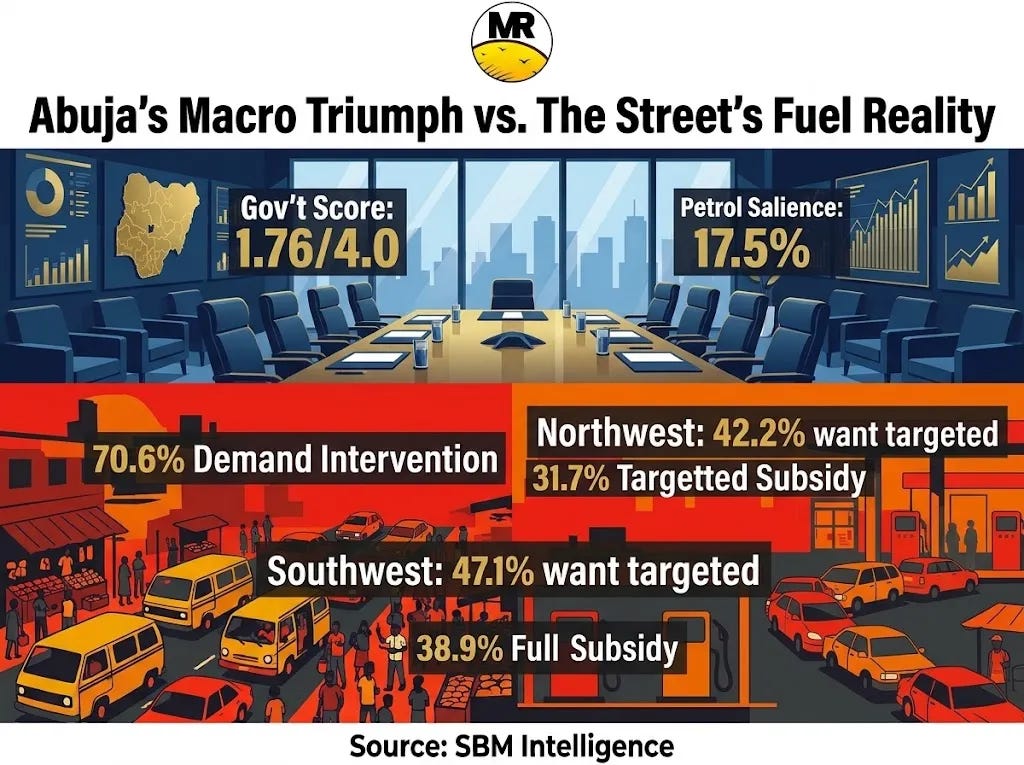
That price is the policy the government cannot quite name. The Federal Government is negotiating a ₦1,350 per litre ceiling on the ex-gantry or landing cost of petrol, alongside a 30-day NNPC retail discount, while insisting this is not a return to subsidy. Finance Minister Taiwo Oyedele has warned that restoring the subsidy outright would cost over ₦20 trillion a year and push petrol toward ₦2,000. The distinction between a ceiling and a subsidy is real on paper. At the pump, the motorist only knows what he pays. The allowance is temporary. The crisis is not.
The judiciary spent the week being told what it already knows. Retired Supreme Court Justice Amina Augie warned that corruption among judges, lawyers and court officials is turning the courts into “market stalls”, and that public distrust could undermine the legitimacy of the 2027 election. The warning landed the same week an AAC governorship candidate, Doris Ogala, was remanded in Lagos over cyberbullying charges linked to Pastor Chris Okafor, a case her party calls political intimidation. In Abuja, an NSCDC officer, Onoja Samuel, was arrested for firing a pistol into the air at Kubwa Market after traders allegedly assaulted his wife. A CZ pistol and 17 rounds were recovered. The courts are being asked to clean up a system that keeps producing cases like these. Trust is not given. It is earned, and it is running out.
The House of Representatives has proposed conceding federal roads to private investors and bringing back toll gates to fund maintenance, citing a 2023 assessment that over 60 per cent of federal roads are in bad shape. The motion is sensible in theory. Private capital can rehabilitate what the budget cannot. But tolls are only fair if the road actually improves, and Nigerians have watched too many concessions collect revenue while the potholes multiply. The framework must be transparent, the pricing must be affordable, and the contracts must outlast the administration that signs them.
50 litres for a month. A ceiling that is not a subsidy. A court that is a market. A toll gate on a road that may never be fixed. These are not separate stories. They are the same story: a country where the relief is temporary, the institutions are compromised, and the people keep paying for promises that expire before the paint dries.
Warmly,
Lolade