


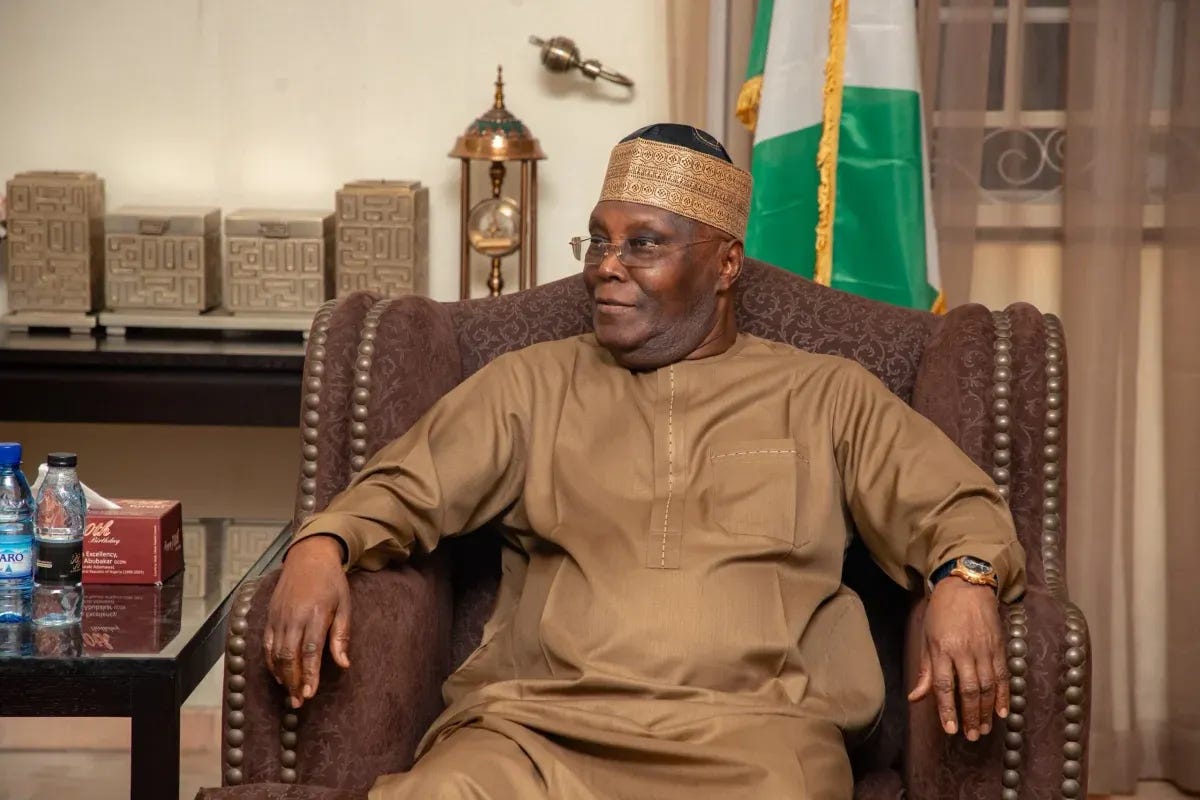
Former Vice President Atiku Abubakar has criticised the Federal Government’s ₦70,000 monthly transport support for public service workers. The ADC presidential candidate described it as a desperate last-minute attempt to contain public anger. He said it admits that government policies have made life unbearable for millions. He spoke in a statement by Phrank Shaibu, Director of Strategic Communication of the ADC Presidential Campaign Council.
The government removed the petrol subsidy in May 2023. Pump prices rose from about ₦185 to over ₦1,400 per litre. In 2024, the government raised the minimum wage to ₦70,000. Inflation eroded its value. In 2026, labour unions demanded relief. The government announced a ₦70,000 transport allowance for federal workers. The allowance is temporary. It does not cover the private sector. It does not address food, rent or energy costs.
Atiku said the allowance is inadequate. “At about ₦1,400 per litre, ₦70,000 buys roughly 50 litres of petrol,” he said. “What meaningful difference can 50 litres make over an entire month?” He listed the wider cost pressures. Barbers pay more to power clippers. Restaurant owners face higher cooking costs. Shopkeepers struggle to keep prices down. School bus operators pay more for fuel. Families still must buy food.
He questioned the scope. “If public service workers receive ₦70,000 monthly for transport from November, what happens to private sector workers, traders, small businesses, transport operators and millions without formal jobs?” He said a temporary allowance for some cannot solve a national crisis. He also said the agreement leaves the effective date for a new minimum wage unresolved. He demanded payment dates, eligibility rules and a timeline for wage negotiations.
He described the pattern. “The fuel discount failed, the 90-day cost of living plan failed before it began, and now comes another temporary payment.” He said the CNG programme has not lowered transport costs. He called the announcements “political bribery and corruption.” He proposed an alternative: a transparently managed production subsidy for fuel refined in Nigeria. “Tinubu must not punish 250 million Nigerians for the corruption and leakages of a few thousand,” he said.
Winners: Atiku, who gains a campaign issue. The opposition, which gains a narrative. Federal workers, if the allowance is paid. Losers: The Federal Government, which faces criticism. Private sector workers, who receive no allowance. Traders and small businesses, who face costs without relief. Nigerians who see the allowance as inadequate. The government, if the policy fails to calm anger.
Bottom Line: ₦70,000 buys 50 litres. That is the government’s relief. Atiku calls it a mockery. He is right that it is small. He is also campaigning. The allowance is temporary. The crisis is not.