


Good morning,
The Flamingos beat Japan 2-1 in Rabat and won Nigeria’s first FIFA U-17 Women’s World Cup. Queen Joseph, Awawu Bashiru and the rest of them were magnificent, and Japan await in the final. But before the presidential lunch and the promised plots of land, read what Osasu Obayuwana said on X: no major football nation celebrates these titles the way African countries do, because U-17 and U-20 tournaments are about discovering talent and building senior teams, not collecting trophies. Nigeria has won U-17 titles since 1985, and 41 years later the Super Eagles are not World Cup contenders. The girls need scholarships, maintenance grants and investments locked until they turn 21. Not a handshake and a survey plan that takes a decade to perfect. The same week, the NUJ pushed a bill for journalist salaries, and one understood why. Reporters covering the Flamingos’ triumph will file from a hotel lobby on a stipend that does not cover transport. We celebrate the children and underpay the people who tell their story.
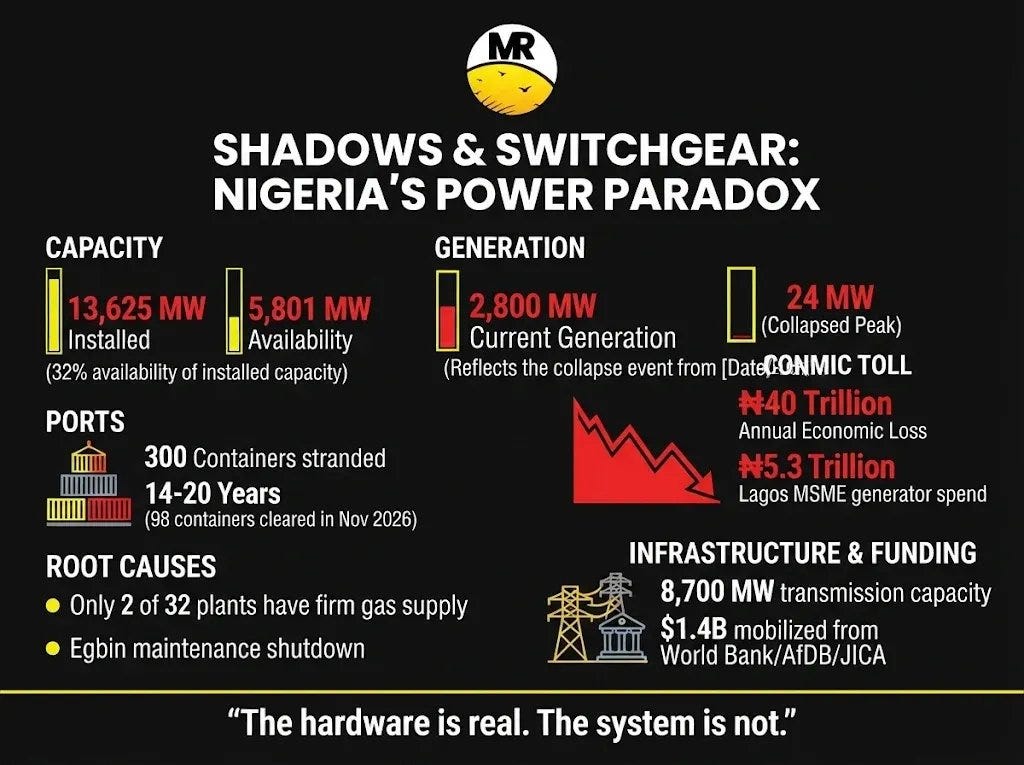
The power sector spent the week explaining itself in two directions at once. NNPC denies that gas shortages caused the latest collapse, insisting it has supplied the agreed volumes and pointing instead at ageing turbines and transmission failures. The system operator says gas constraints and low water inflows are exactly the problem. Somewhere between the two statements is the truth, and the truth is that Nigeria has installed capacity it cannot convert into steady electricity because the infrastructure is old, the grid is fragile, and nobody is investing at scale. Households buy inverters, generators and solar panels, and are taxed three times for one service.
In Surulere, the Lagos State Government sealed a church over noise pollution. Praise them. Residents have complained for years about loudspeakers at dawn, and the state finally acted. Enforcement is rare in this country, and when it arrives, it usually targets the poor. This time it targeted an institution with a congregation and a microphone, and it held. Meanwhile, a Babcock University student died after a fall in his dormitory. The university has said little. Parents are asking questions that will not be answered publicly, and a family is planning a funeral instead of a graduation.
The Army restored its X account after a breach months ago, a small mercy in a season of cyberattacks, and Benin City has quietly emerged as a cultural hub, hosting exhibitions and drawing visitors who once flew straight to Lagos. Good news travels slowly. In Asaba, a rally clash killed one person and injured several others, the same week the Senate proposed reserving 74 seats for women in the National Assembly. It sounds progressive until you read Ayisha Osori’s Love Does Not Win Elections, which documents the gate fees, the godfathers, the violence and the costs that keep women out long before the ballot is printed. Reserving seats does not remove those barriers. It decorates them.
And then the comedy. David Umahi, the Minister of Works, has fired back at Cubana Chiefpriest over a road project, and the exchange has produced more heat than the Benin-Sapele highway has produced asphalt. A minister and a nightclub owner arguing publicly while the road remains broken is the most Nigerian sentence of the week. The Flamingos won. The grid failed. The church was sealed. The bill was introduced. The road is still bad.
Warmly,
Lolade