


Good morning,
A bag of rice fell from a vehicle at Ring Road in Benin City and spilled into the dirty water pooled at the roadside. The owner did not come back for it. Residents came with bowls, bags and bare hands and packed it out of the mud anyway. Days earlier, at Oluku Market in the same city, five people died scooping fuel from an overturned tanker. The same hunger that sends a man into a fuel spill sends a mother into a gutter for rice. Food inflation is at 19.59 per cent. The World Bank says 63 per cent of Nigerians live in poverty. Nobody scoops rice from dirty water because they are greedy. They do it because the alternative is going to bed hungry.
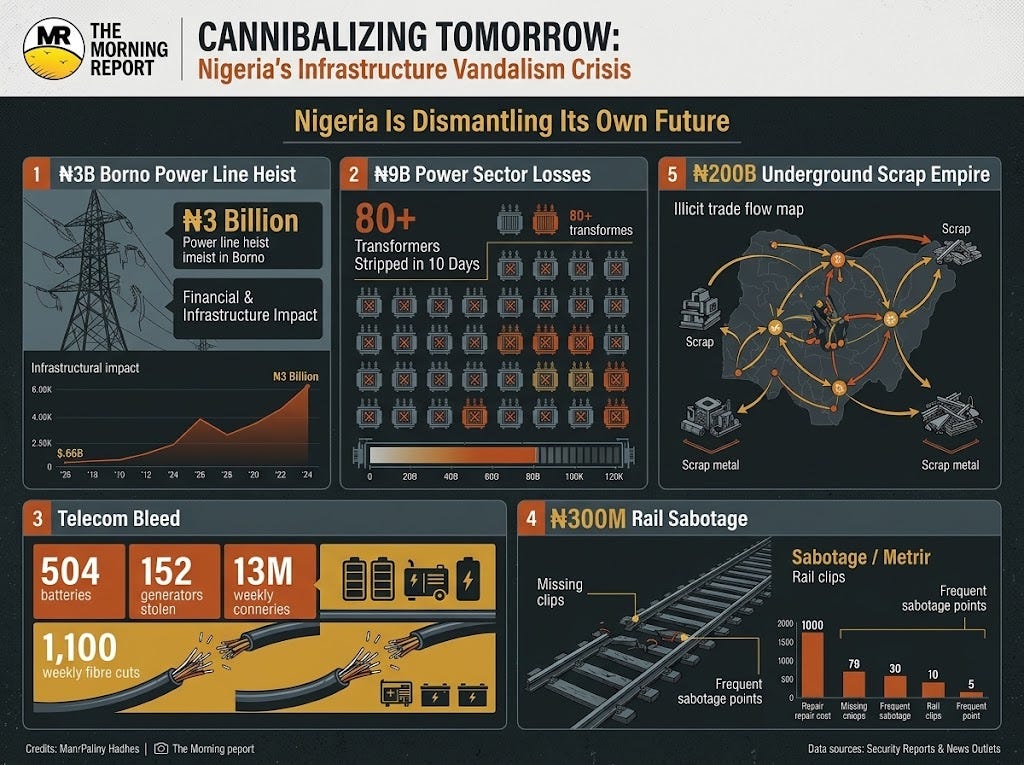
Meanwhile, the country is being dismantled by its own citizens and sold as scrap. Borno has banned scrap metal trading outright after a ₦3 billion transmission line linking Damaturu to Maiduguri was stripped and sold, plunging communities back into darkness just as counter-insurgency gains began to hold. The bridge they are pulling down is the future of a country being cannibalised by its own people. And the Army is busy enforcing a ban on camouflage in the only way it knows how: with rough hands, brutalising and detaining civilians over fashion choices, while bandits in the North-West wear the same gear to ambush soldiers and nobody detains them. The state protects its symbols. It does not protect its citizens.
In Zamfara, the bandits have discovered TikTok. An armed group on the Dansadau-Gusau road has burned close to 50 vehicles since last week, filmed the destruction, posted it online, and promised to burn 250 more. They chased out an entire village and set it ablaze. In Bukkuyum, bandits killed at least nine security personnel and several civilians, and when the deputy governor came to condole, youths blocked the town gate and chanted “Bamayi”. We don’t want you. Government visits arrive after the funerals, never during the fighting. The people have stopped pretending otherwise.
The smaller stories are just as heavy. A man was banished from Okwulaga Afaraukwu Ibeku in Abia after youths caught him burying a charm on farmland, traditional justice moving faster than any court and with less evidence. In Auchi, Edo state, a man named Sunday broke a back window, lived in a stranger’s house for four days, cooked the tenant’s beans and rice, bathed, and explained he had kept the window open as an escape route. In Ekiti, a woman stuffed cloth under her clothes to fake a pregnancy and tried to take a newborn, with an accomplice posing as her sister. And Clemens Westerhof, the Dutchman who built the 1994 Super Eagles, is 86 and has been diagnosed with colon cancer. We owe him our prayers.
There is one number worth holding onto. Imported food inflation slowed to 9.19 per cent in September, the slowest pace in six months, as the naira steadied. The trend is real. It is also not relief, because prices are still rising, just more slowly, and the country spent ₦3.30 trillion on food and beverage imports in the first half of the year, and 34.7 million Nigerians may face severe food insecurity in the next lean season. A slowdown in inflation is not a drop in prices. The rice still comes out of the water.
Warmly,
Lolade