


Good morning,
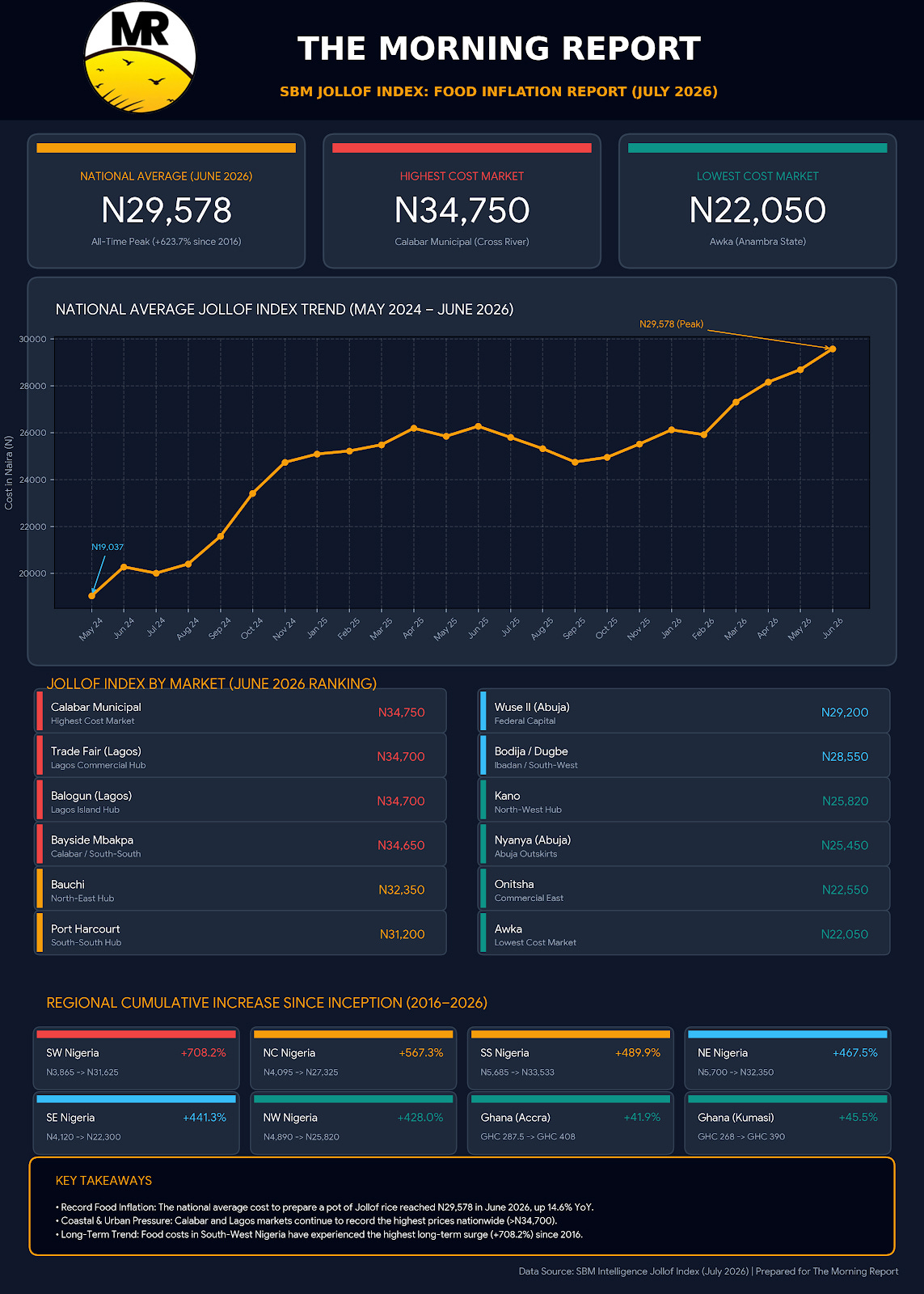
A single pot of jollof rice now costs ₦29,578. Ten years ago, it was ₦4,087. That is a 624% increase. For a minimum wage earner on ₦70,000, that one meal consumes over 40% of their monthly salary. A single pot of rice, tomatoes, and protein now costs nearly half a month of labour. In Calabar, that same pot costs ₦34,750. In Awka, ₦22,050. The gap of ₦12,000 between two Nigerian cities is not just a statistic. It is a map of our broken supply chains, our collapsed logistics, our imported inflation. People are working full time merely to afford basic calories. The jollof index is not about food, but also about survival.
While Nigerians struggle to eat, a virus is spreading. The Ebola death toll in the Democratic Republic of Congo has risen to 999, with 2,473 confirmed cases. The Bundibugyo strain has no approved vaccine or treatment. The true number of infections could be four times higher. Fewer than 9% of contacts are being monitored. Nigeria’s borders are porous. Its health surveillance systems are weak. The 2014 outbreak claimed over 11,000 lives across West Africa. The lesson was clear. The question is whether Nigeria has learned it.
In Benue, a 15-year-old boy is dead. Muhammad Isiyaku was shot in a fresh armed attack on Ugboju communities in Otukpo LGA. About 500 cattle were rustled. Residents have fled their homes. The attack targeted the family of the late Ardo Risku Muhammad, killed in a similar attack weeks ago. The cycle continues. The government responds with deployments and committees. The violence does not stop.
In all this, there is some relief. Petrol marketers have resumed fuel loading at private depots after a brief pause to adjust prices. The scarcity scare is over. The volatility remains.
And the Senate is investigating. It has extended its probe into the $30 million Safe Schools Initiative by three weeks, broadening the scope to include TETFund, NELFUND and UBEC. The question is whether it will lead to accountability or just more questions.
Warmly,
Lolade