


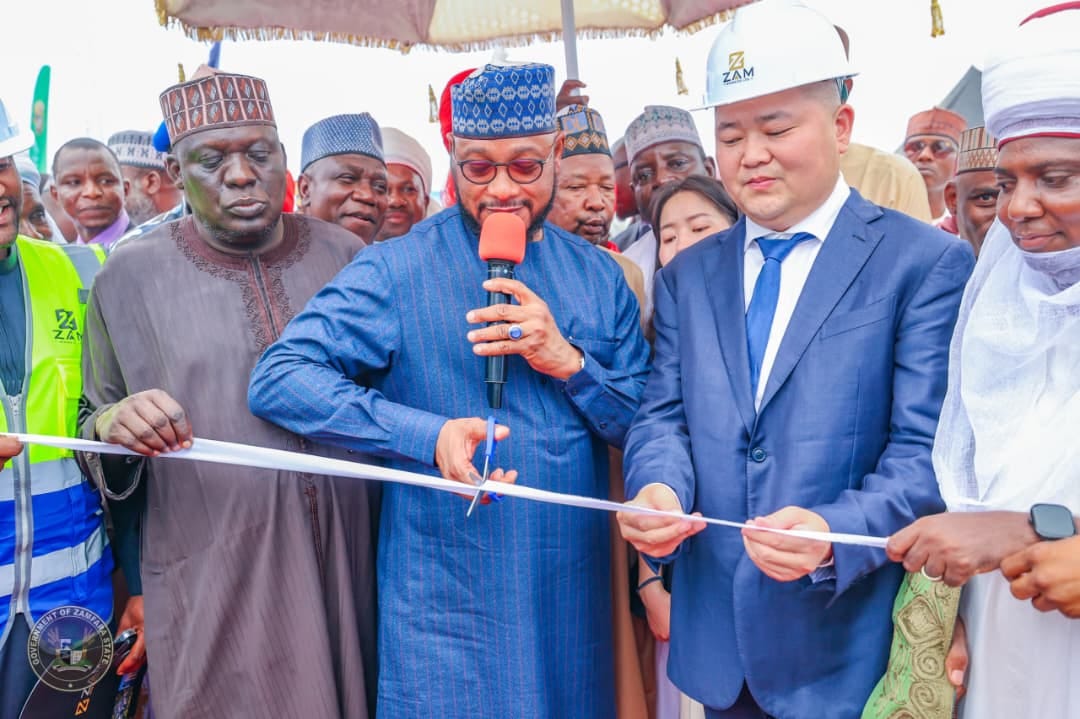
Zamfara State Governor Dauda Lawal has unveiled a $200 million lithium mining and processing plant in Boko, Zurmi Local Government Area, marking a major step in the state’s efforts to expand local mineral processing and attract investment into the mining sector. The development was disclosed in a statement issued on Sunday by the Governor’s spokesperson, Sulaiman Idris.
The commissioning comes days after the Federal Government inaugurated a 6,000-metric-tonne-per-day lithium processing facility in Nasarawa State, underscoring growing investment in Nigeria’s critical minerals industry. Speaking at the unveiling, Governor Lawal described the project as a significant milestone in Zamfara’s drive toward responsible mining, industrialisation, and economic diversification. According to him, the plant represents a shift from the traditional model of exporting raw minerals to a strategy focused on local processing, value addition, and job creation.
“Development comes when resources are managed efficiently and transparently, and government provides an enabling environment for investors to operate responsibly,” Lawal said. He noted that rising global demand for lithium and other critical minerals, driven by renewable energy technologies, electric vehicles, and industrial applications, presents a major opportunity for the state. Lawal stressed that Zamfara must move beyond being a supplier of raw mineral resources and become an active participant throughout the mining value chain, including processing, industrial development, and skills acquisition.
The $200 million lithium project is a joint investment involving Zam Mining Company Limited, Bima Mines Limited, Jinlide Mining Company Limited, and other partners. The governor commended the participating firms for demonstrating confidence in Zamfara’s investment climate. He assured investors that the state government would continue to provide support through infrastructure development, policy reforms, and stronger collaboration with industry stakeholders.
The governor emphasised the need for host communities to benefit directly from mining activities through employment opportunities, skills development programmes, environmental protection measures, and corporate social responsibility initiatives. He directed operators to prioritise local hiring, knowledge transfer, and sustainable development practices. The project is expected to generate at least 2,000 direct and indirect jobs, with preference given to qualified residents of Zamfara State, particularly those from host communities.
Zamfara has been one of Nigeria’s most troubled states, plagued by banditry, kidnapping and illegal mining. The lithium plant represents a bet that the state can transition from conflict to industry. The question is whether the security situation will allow the investment to thrive. This mirrors the 2010s oil and gas boom in the Niger Delta, where large-scale investment coexisted with insecurity and environmental degradation.
The winners: Zamfara State, which gains investment and jobs; the investors, who stand to profit from the lithium boom; and the Nigerian economy, which moves closer to value addition. The losers: the illegal miners who will be displaced, and the environment, which faces new risks from mining activity.
Bottom Line: A $200 million lithium plant in Zamfara. That is good news. The bad news is that Zamfara is still one of Nigeria’s most dangerous states. The plant will create jobs. The question is whether it will also create security.