


For a generation of Nigerians who grew up in the shadow of the 2008 financial crisis, the stock market was a warning, not an opportunity. Between March and December 2008, investors lost an estimated ₦6.96 trillion ($55.03 billion at the then exchange rate), a collapse that traumatised a generation and left many families distrustful of shares.
Nearly two decades later, another generation is embracing the stock market, this time through smartphones instead of stockbrokers’ offices. Many are too young to remember the crash that shaped their parents’ relationship with investing. “Everything in life is a risk. Why sit with the thought of it crashing and not do anything?” said Faramade, a Lagos-based communications professional. “Even my mum, who faced the crash, invests through Bamboo now”.
Faramade earns a little over ₦800,000 ($578.42) and has invested at least ₦200,000 ($144.61) monthly for the past year through Bamboo, a Nigerian digital investment platform. She relies on recommendations from her stockbroker, market news and conversations with a close friend who has been investing for years. Her portfolio has suffered only a handful of losses, with several successful investments generating returns of around 30 per cent.
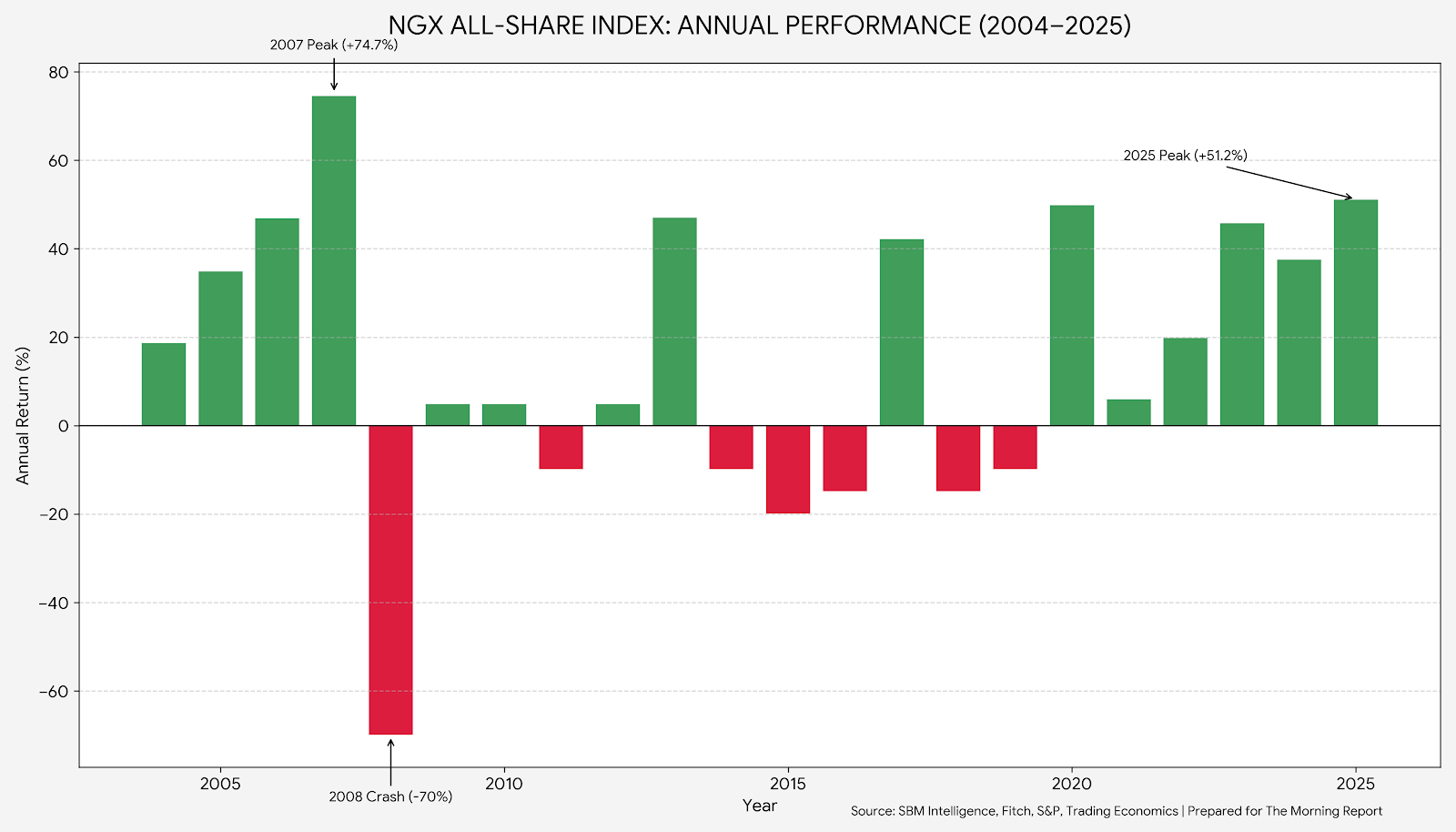
The younger generation’s willingness to invest reflects a broader shift in Nigeria’s capital markets. Digital investment platforms have made it easier for retail investors to participate, and the Nigerian stock market has delivered strong returns in recent years. The NGX All-Share Index has risen significantly since 2023, attracting a new wave of retail investors.
This mirrors the 2004-2007 stock market boom, which also attracted first-time investors drawn by rising prices and widespread optimism. The difference is that today’s investors are using digital platforms, and many are aware of the risks. The question is whether they will be able to avoid the mistakes of their parents.
The winners: the new generation of retail investors who are building wealth; Nigerian digital investment platforms, which are growing rapidly; and the Nigerian capital market, which is broadening its investor base. The losers: the generation that lost money in 2008 and is still wary of the market.
Bottom Line: A new generation is buying stocks despite the trauma of 2008. They are using apps instead of brokers. The question is whether they will be smarter than their parents or make the same mistakes.