


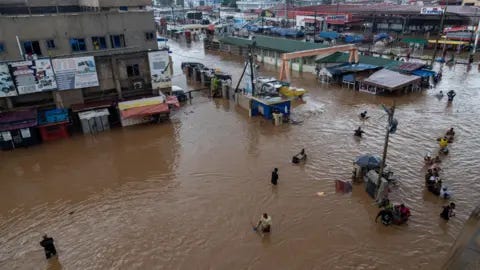
The World Bank has blamed fiscal controls introduced by Ghana’s Ministry of Finance for significantly delaying the implementation of the $350 million Greater Accra Resilient and Integrated Development (GARID) Project, a key programme designed to reduce chronic flooding in the capital. In its latest implementation update, the Bank downgraded the project’s performance rating to “Moderately Unsatisfactory,” citing funding constraints despite the project being fully financed.
The report comes days after devastating floods on June 29 killed at least 12 people, renewing concerns over Accra’s flood management system. While the Bank said the project’s overall development objectives remain on track, it noted that construction of major drainage infrastructure has progressed slowly, with several contractors behind schedule. It attributed the delays largely to financing restrictions imposed in 2025. The Bank added that the flood early warning system is operational and solid waste collection has exceeded annual targets, although no public flood warning was issued before the June 29 flooding.
The Nigerian stake is clear. Accra’s flooding is not unique; Lagos, Port Harcourt and other Nigerian cities face the same challenges. The World Bank’s findings highlight a broader problem: fiscal controls intended to manage budgets can inadvertently delay critical infrastructure projects. When the money is available but cannot be disbursed, the result is the same as if the money did not exist.
This mirrors the delays Nigeria has experienced with World Bank-funded projects in the past, particularly in the water and transport sectors. The 2019 Lagos drainage project, funded by the World Bank, also faced implementation delays due to bureaucratic bottlenecks. The pattern is consistent: international financing is available, but domestic fiscal controls slow disbursement, and the result is incomplete infrastructure that leaves citizens vulnerable.
From a Nigerian vantage point, the lesson is clear: fiscal controls are necessary, but they must be designed to allow timely implementation of emergency infrastructure. The GARID project’s delays have cost lives. Nigeria cannot afford to make the same mistake.
The winners: contractors who will eventually get paid, though later than planned. The losers: Accra residents who continue to face flooding, and the World Bank’s credibility, which suffers when fully financed projects fail to deliver on time.
Bottom Line: The money was available. The project is behind schedule. Accra is still flooding. That is not a funding problem. That is a governance problem.