


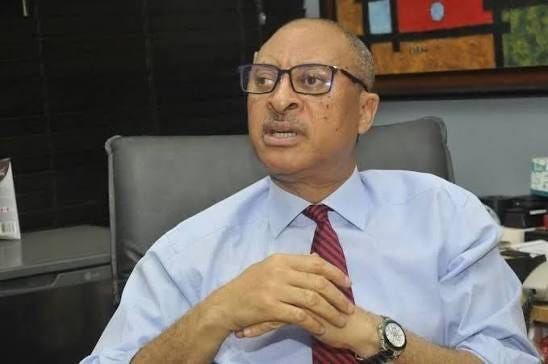
Professor of political economy, Pat Utomi, has warned that rising poverty, hunger, insecurity and declining public confidence in government institutions are pushing Nigerians to the brink. This is as he urged citizens to resist the erosion of democratic values ahead of the 2027 elections. Utomi spoke on Wednesday in Lagos while addressing journalists on the state of the nation and efforts by civil society groups to promote credible elections in 2027.
He said the level of hardship in the country had become alarming, with millions of Nigerians facing food insecurity and struggling to meet their basic needs. “The pain, the hunger and the anger in the land are so palpable you could slice it with a blunt knife,” he said. “The poverty numbers from the World Bank are numbing, and we heard from the International Monetary Fund that our fellow citizens living in food insecurity are as many as 35 million people.”
Utomi also noted that the country’s economic difficulties were being worsened by deteriorating infrastructure. He cited the Lagos-Ibadan-Onitsha economic corridor, particularly the Benin-Asaba section of the highway, as an example of the country’s infrastructure challenges. According to him, a journey that previously took about one hour and 10 minutes now takes more than three hours.
He said public confidence in major institutions, including the judiciary, police, Economic and Financial Crimes Commission and the Independent National Electoral Commission, had declined significantly. “Our institutions are crumbling. Public confidence in the judiciary, the police and the EFCC are at an all-time low, and most people think there is nothing independent about INEC,” he said.
The professor also lamented the increasing number of Nigerians seeking financial assistance, saying the hardship had affected people who were previously considered economically stable. “Until recently, I was beginning to think I was being targeted for being dragged into penury from the avalanche of desperate calls for financial help. I have now found that many others are experiencing the same from people once assumed to be hardworking middle-class people. We have become a nation of beggars because of poor policy choices by politicians who have prioritised their living in opulence over ensuring the basic needs of people can be met.”
Utomi further accused political actors of exploiting ethnic and religious divisions instead of addressing the economic hardship facing citizens. He warned that the growing inequality between wealthy politicians and impoverished citizens could have serious consequences for national stability. He also called on citizens to defend democratic institutions and demand accountability from public officials.
Utomi’s warning is a sobering assessment of the state of the nation. The figures he cited, 35 million Nigerians facing food insecurity, are a damning indictment of the government’s performance. The decline in public confidence in institutions is equally alarming. When citizens lose faith in the judiciary, the police and the electoral commission, the foundation of democracy is eroded. The growing inequality between the political class and the masses is a recipe for instability. The question is whether the government will heed the warning or continue on its current path.
This echoes the 2015 warnings by civil society groups about the fragility of Nigeria’s democracy, which also cited poverty and inequality as threats to stability. The mechanism then was different, but the result was the same: a nation on the brink.
The winners: none. The losers: the Nigerian people, who continue to bear the brunt of poverty and hunger; and the Nigerian state, which is losing the trust of its citizens.
Bottom Line: Nigeria is a nation in crisis. The pain and hunger are palpable. The question is whether the political class will act or wait for the breaking point.