


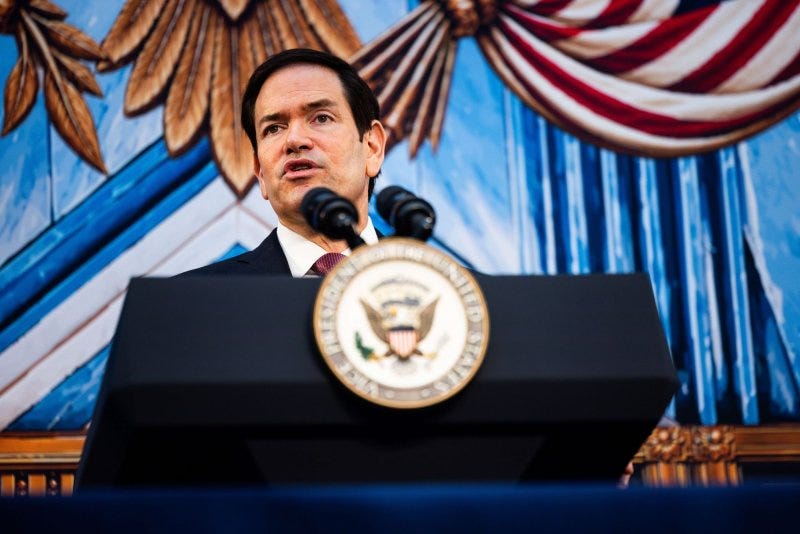
The United States has announced new visa restrictions targeting some South African nationals. The move further strains relations between Washington and Pretoria. Secretary of State Marco Rubio said the policy applies to foreign nationals deemed responsible for or complicit in policies involving uncompensated land seizures, race-based discrimination or incitement of imminent violence against minority groups.
Relations between the US and South Africa have deteriorated. The Trump administration criticised South Africa’s land reform policies. It also objected to South Africa’s genocide case against Israel at the International Court of Justice. Washington cut aid to South Africa and took other diplomatic measures. Pretoria rejects claims that white South Africans face persecution. It says there is no evidence of systematic discrimination and that racial supremacy threatens post-apartheid unity.
Rubio did not identify individuals affected by the restrictions. The policy is framed around land seizures and discrimination. South Africa’s land reform aims to address historical dispossession. White South Africans own a disproportionate share of agricultural land. The reform process has been slow and contested. The US claims it involves uncompensated seizures. South Africa denies this.
The diplomatic implications are significant. South Africa is a major US trading partner in Africa. It is also a member of BRICS. The visa restrictions signal US disapproval. They may also push South Africa closer to China and Russia. The African National Congress has historically maintained ties with both. The restrictions could deepen that alignment.
For Nigeria, the US-South Africa rift is instructive. Nigeria also faces US pressure on governance and security issues. It also balances between Western and non-Western partners. The lesson is that US visa policy is a tool of diplomacy. African countries that challenge US positions face consequences.
Winners: The Trump administration, which appeals to its domestic base. US critics of South Africa’s land policy. Losers: South African nationals affected by the restrictions. US-South Africa relations. South Africa’s economy, if investment is deterred. African unity, if the continent splits over the issue. Nigeria, if it is drawn into the dispute.
Bottom Line: The US is using visas to pressure South Africa. Pretoria will not change its land policy. The restrictions deepen a rift that benefits neither country. Africa should watch how quickly a bilateral dispute becomes a continental one.