


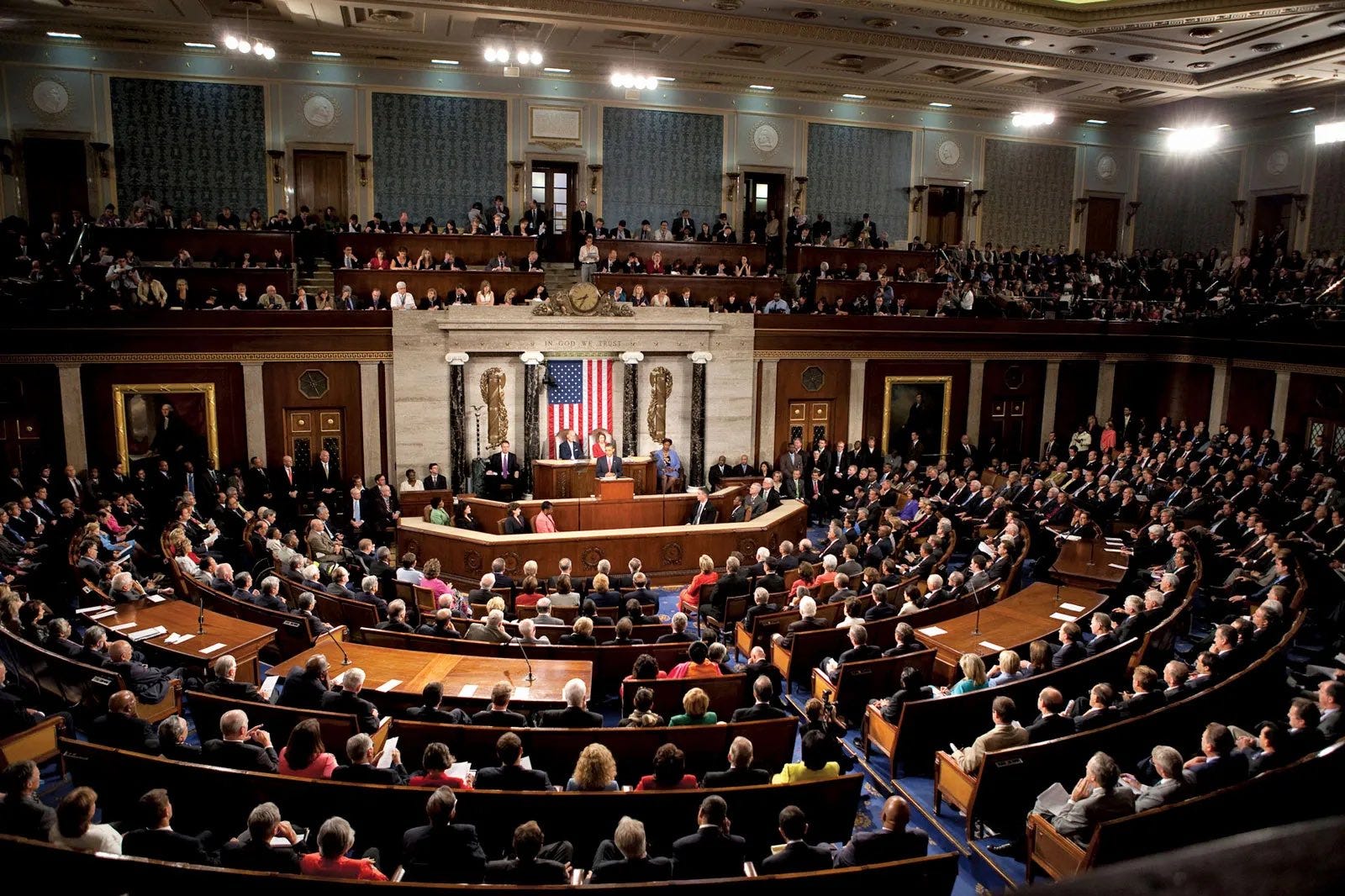
The US House of Representatives has passed a fiscal year spending bill with provisions to cut foreign assistance to Nigeria over alleged targeted violence against Christians and other vulnerable communities. The National Security, Department of State and Related Programs Appropriations Act for the 2027 fiscal year was passed on Wednesday in a 217-209 vote.
The bill contains a provision to withhold all foreign assistance to Nigeria until the US can certify that the Nigerian government is taking effective steps to protect Christians from violence. The measure includes “restricting assistance to Nigeria until measurable actions are taken to protect Christian communities suffering from religious violence”.
The provision was championed by Republican lawmakers Riley Moore and Jeff Steube. Steube announced the bill’s passage on X, saying: “American taxpayers should NEVER bankroll governments that turn a blind eye while Christians are abducted, tortured, and murdered”. Moore, who previously accused the Nigerian government of Christian genocide, pushed for language to restrict assistance on the ground that “not enough has been done against Fulani Islamist terrorists in the Middle Belt”.
The bill initially restricted 50 percent of US assistance, but Steube proposed an amendment to withhold 100 percent, arguing that withholding only half appeared to reward the Nigerian government despite its failure to protect citizens. The House agreed to the amendment.
The Nigerian stake is significant. The US is one of Nigeria’s largest bilateral donors, and a complete cut in assistance would have serious consequences for the country’s security and development programmes. The bill, however, must still pass the Senate and be signed by President Trump before becoming law.
From a Nigerian vantage point, the bill is a diplomatic rebuke. It reflects growing frustration in Washington with Nigeria’s handling of insecurity and religious violence. The Nigerian government has consistently denied allegations of religious persecution, arguing that violence in the Middle Belt is driven by economic and communal factors rather than religion. The US Congress appears unconvinced.
This echoes the 2019 International Religious Freedom Act designations, which also placed Nigeria on a watchlist for religious freedom violations. The mechanism then was different, but the result was the same: diplomatic pressure on Nigeria to address religious violence.
The winners: the US lawmakers who championed the bill, and the Christian advocacy groups that lobbied for it. The losers: the Nigerian government, which faces diplomatic pressure and potential aid cuts; and the Nigerian people, who may lose access to US-funded programmes.
Bottom Line: The US House has voted to cut aid to Nigeria over religious violence. The bill must still pass the Senate. The message is clear: Washington is losing patience with Abuja.