


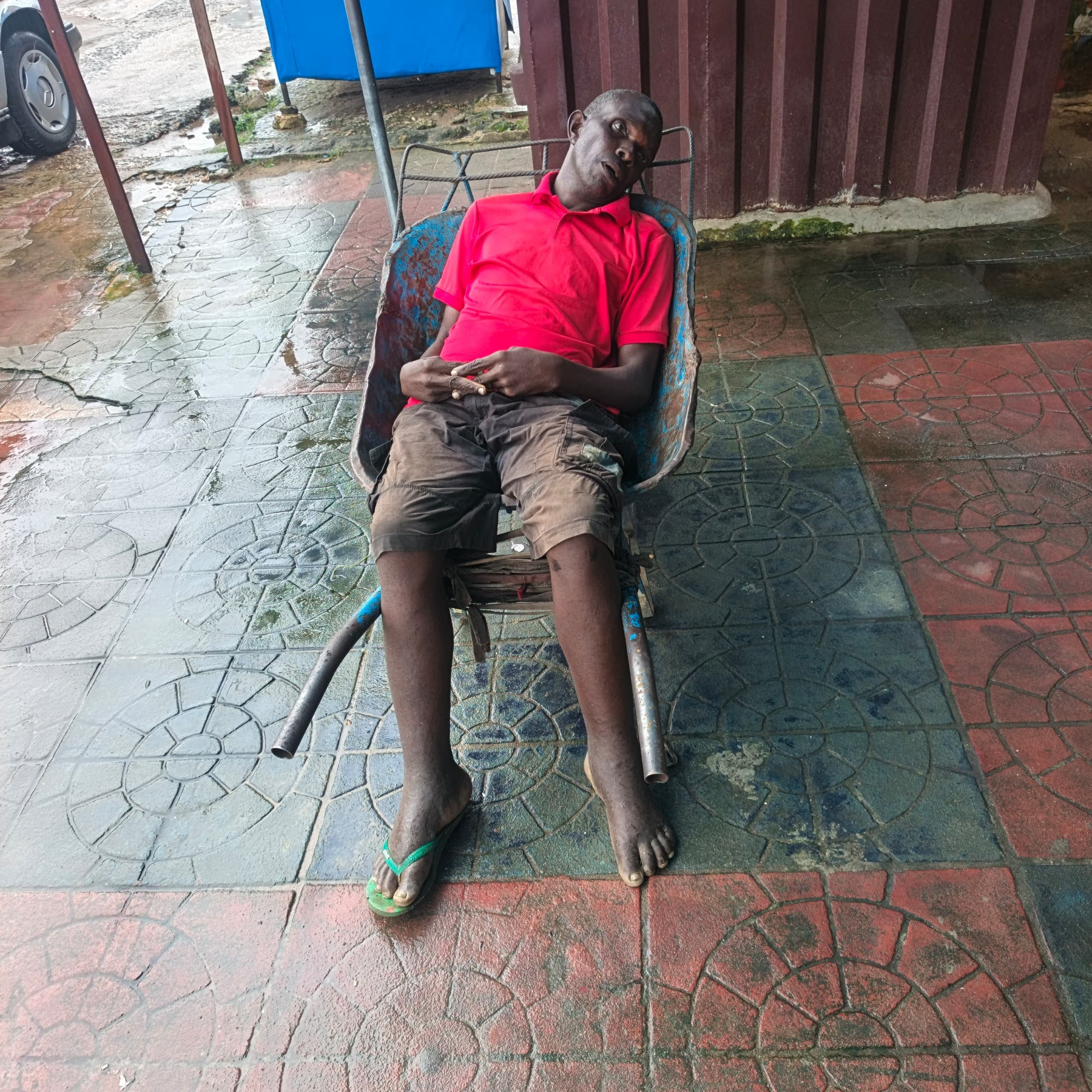
Passersby on Aba-Owerri Road, Abia State, have found the unidentified body of a man, believed to be in his 50s, decomposing in a wheelbarrow. He was supposedly napping in the barrow. The discovery has prompted a police investigation into the circumstances surrounding his death.
The body was found at Atuma House, opposite St. Paul’s Church at 104 Aba-Owerri Road, Umungasi. By the time of discovery, the remains, according to eyewitnesses, had begun to decompose. While social media reports suggested the man may have died while resting after a day’s work, authorities have not yet confirmed the cause of death.
A letter from the Abayi Police Division to the Environmental Health Department of the Osisioma Ngwa Local Government Council confirmed the incident. The Divisional Police Officer in charge of the Abayi Police Division, Okereke Amos, requested an urgent evacuation, stating that the corpse posed a significant public health hazard. Acting on the directive, health officials, accompanied by officers from the Abayi Police Division, evacuated the remains to the Abia State University Teaching Hospital at Ahiaba Umueze.
The police spokesperson in Abia, Maureen Chinaka, confirmed the incident to Premium Times on Friday, stating that an investigation is now underway to determine the identity of the deceased and the circumstances surrounding his death. The Environmental Health Services Department of the Osisioma Ngwa Local Government Area has appealed to the public for assistance in identifying the man.
The death of the unidentified pusher is a tragic reminder of the vulnerability of Nigeria’s informal workforce. Wheelbarrow pushers, like many informal workers, often sleep on the streets, exposed to the elements and vulnerable to illness and exploitation. The fact that he died alone and unidentified underscores the precariousness of life for millions of Nigerians working in the informal sector.
This echoes the 2021 death of an unidentified street vendor in Lagos, which similarly sparked debates about the welfare of informal workers. The mechanism then was different, but the result was the same: a society that often fails to notice the suffering of its most vulnerable members.
The winners: none. The losers: the family of the deceased, who may never know what happened to him; and the Nigerian public, which must confront the reality of poverty and vulnerability on its streets.
Bottom Line: A wheelbarrow pusher died on the street. He was napping in his barrow. No one knows who he is. That is not a story about death. It is a story about invisibility.