


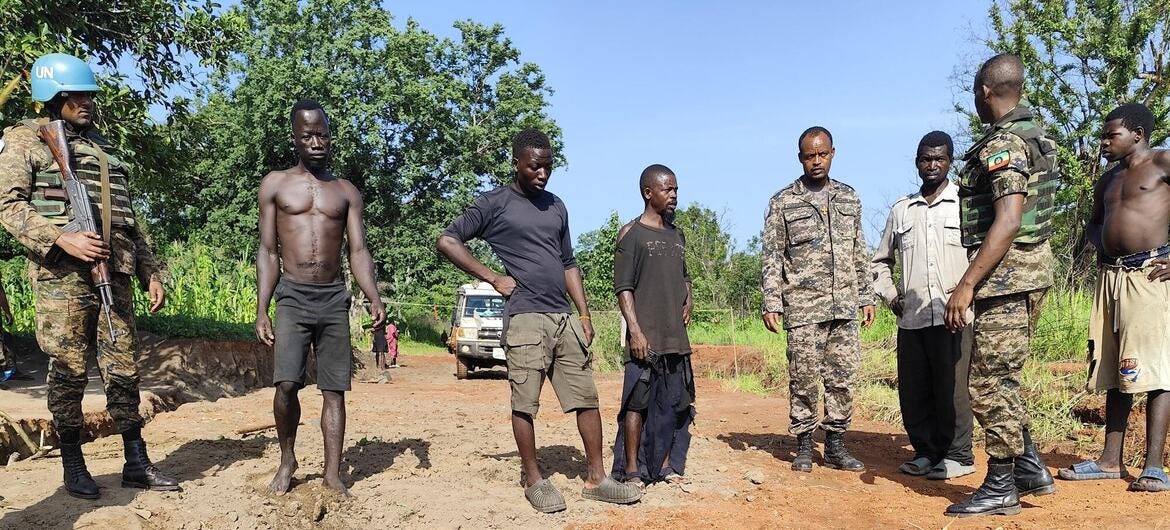
The under-reported humanitarian crisis in South Sudan risks deepening with the real possibility of further atrocity crimes unless renewed fighting stops, a UN-backed probe said on Thursday. With the country on the cusp of its first national elections since independence, the UN Commission on Human Rights in South Sudan stressed that “multiple risk factors for atrocity crimes are converging…The window to prevent a return to the scale of atrocities and displacement South Sudan endured between 2013–2018 is closing, but it has not yet completely shut.”
The warning comes amid the resumption of armed conflict in several parts of the country, in Upper Nile, Jonglei and Unity states, with clashes and civilian deaths also recorded in Western and Central Equatoria states. A total of 407 ceasefire violations were recorded from August 2025 to January 2026. The Commission said “rushing to elections” without essential safeguards risks deepening existing conflicts and increasing the risk of the atrocity crimes genocide, crimes against humanity, war crimes and ethnic cleansing.
In 2018, the country’s warring parties committed to a revitalized peace deal. Today, almost half of its key provisions have not been implemented, including the unification of the country’s security forces. Instead, South Sudan’s people must now endure a “worsening political, security, humanitarian and human rights situation” marked by a return of political division and conflict-related abuses.
The Nigerian stake is clear. South Sudan’s crisis is a reminder of the fragility of peace in Africa. The country’s descent into conflict could have regional implications, including the displacement of people and the spread of instability. Nigeria, as a regional power, has a vested interest in South Sudan’s stability.
From a Nigerian vantage point, the UN warning is a reminder that peace is not guaranteed. The international community must act to prevent a return to the atrocities of 2013-2018. Nigeria must also ensure that its own peace-building efforts are sustained.
This echoes the 2013-2018 South Sudan civil war, which claimed hundreds of thousands of lives and displaced millions. The mechanism then was different, but the result was the same: a humanitarian catastrophe that the world failed to prevent.
The winners: none. The losers: the people of South Sudan, who face the prospect of renewed violence; and the international community, which must act to prevent another catastrophe.
Bottom Line: South Sudan is on the brink of another catastrophe. Elections are approaching. The peace deal has not been implemented. The question is whether the world will act before it is too late.