


British Prime Minister Andy Burnham has appointed Dame Madeline Alessandri as the first UK special representative for climate security. He announced the appointment at the 31st UN Climate Change Conference in Antalya, Türkiye. Burnham pledged a “new era of British leadership” on climate over the next decade. He said two wars across two continents had sent fuel prices and gas bills soaring for families and businesses worldwide. He argued that the shift to clean energy is the only route to energy security.
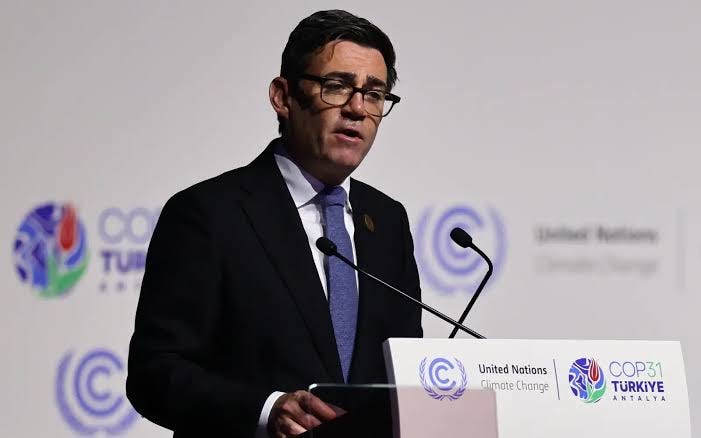
Burnham said the UK approved two major offshore wind projects that will bring billions in investment and power millions of homes. He said a government-funded electric arc furnace in South Wales would secure 5,000 jobs for steelworkers. He noted that Rolls-Royce is taking small modular nuclear reactor technology around the world. The UK takes the G20 presidency in 2027 and plans to put climate resilience back on the agenda, with debt, development and insurance as key issues.
From a Nigerian vantage point, the appointment matters for two reasons. First, climate security is now a diplomatic portfolio. Nigeria faces climate-driven insecurity in the Lake Chad Basin, where shrinking water resources have fuelled conflict. A UK envoy focused on climate security could become a partner in that space. Second, Burnham’s emphasis on electrification and energy security echoes Nigeria’s own dilemma. Nigeria depends on energy it does not control and pays prices it cannot set.
The historical echo is COP26 in Glasgow, where developed countries promised climate finance that has been slow to arrive. Nigeria has pledged net zero by 2060 but remains dependent on oil revenue. The winners are the UK, which gains diplomatic leadership; climate-vulnerable countries, if the envoy brings resources; and renewable investors. The losers are fossil fuel exporters, including Nigeria, if climate diplomacy accelerates the shift away from oil; and developing countries if the envoy is symbolic rather than funded.
Winners: The UK; climate-vulnerable countries if resources follow; renewable investors.
Losers: Fossil fuel exporters including Nigeria; developing countries if the role is symbolic.
Bottom Line: A climate security envoy is a welcome signal. Nigeria’s test is whether the role brings finance for the Lake Chad Basin, not just speeches.