


At about 3:30 am on Wednesday, seven suspected herders accompanied by roughly 200 cattle entered farmland belonging to Amadu Saleh in Wauta Fulani Settlement, Garki Local Government Area, Jigawa State. The animals fed on his guinea corn. When farmers tried to stop the destruction, the herders attacked with cutlasses, bows and arrows. Amiru Saleh, 35, was killed. Amadu Saleh, 50, and Haruna Saleh, 37, were injured. Other farmers gathered, and two unidentified herders were killed in the ensuing confrontation. The surviving herders fled with their cattle towards Gabasawa in Kano State. The NSCDC confirmed the incident and appealed for calm.
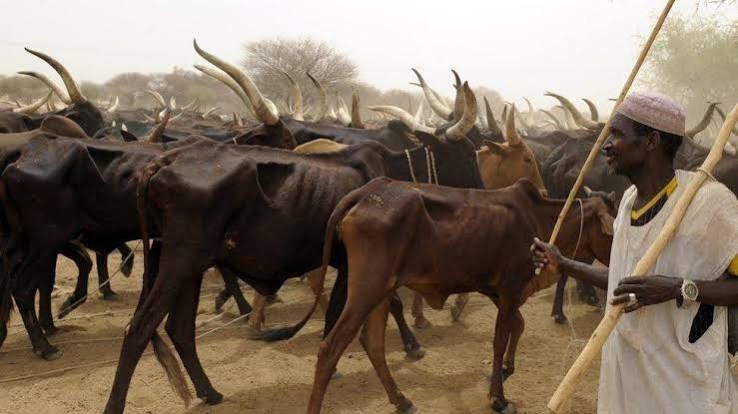
The mechanics are as predictable as the violence. Herders moving cattle south encounter farms. Farmers whose crops are destroyed confront the herders. A dispute over a single field becomes a communal fight. The state arrives after the bodies are in the hospital. The NSCDC statement urges peaceful coexistence. It does not address the underlying contest over land and water that has been escalating for two decades.
This echoes the 2018 Benue clashes and the 2021 Oyo crisis, each of which produced a commission, a communique and no durable settlement. It also mirrors the longer pattern of Nigerian security agencies treating farmer-herder violence as a public order problem rather than a land-use problem.
The winners are the politicians who can point to security deployments after the fact, and the herders who escaped with their cattle. The losers are the three dead, the two injured, and every farmer in Garki who now knows that a crop dispute can end with a cutlass.
Bottom Line: Two hundred cattle will always find the crops. Until someone fixes the land-use framework, the NSCDC will keep issuing statements about calm.