


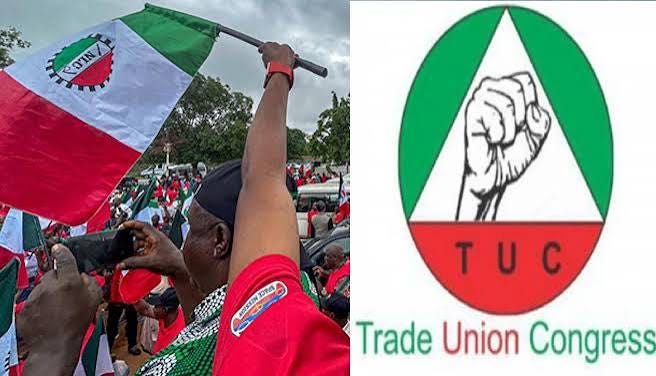
The Trade Union Congress has rejected the Federal Government’s proposed ₦70,000 monthly transport allowance. The congress wants the salary of the lowest-paid worker raised from ₦70,000 to ₦300,000, with consequential adjustments across other grade levels.
The TUC’s National Administrative Council reached the decision at a meeting in Abuja on 8 October. President Festus Osifo and Secretary-General N.A. Toro signed the statement issued on Wednesday.
The congress’s argument is procedural and substantive. The government does not need to wait for minimum wage negotiations before raising salaries, the TUC said, because there is no maximum wage law in Nigeria. “The Federal Government should review increasing workers’ salaries,” the statement said. “This was hinged on the fact that the government does not require the minimum wage to be negotiated before increasing workers’ pay.”
The TUC also cited the government’s track record. The wage award agreed on 2 October 2023 was meant to be implemented until a minimum wage was agreed in 2024. It was never implemented holistically. Some workers are still owed one or two months’ payments. Others received nothing. More than 80 per cent of states and informal-sector workers did not benefit from any wage award.
“How do we go back to the same wage award that never benefited all workers?” the TUC asked. “How can workers be expected to trust fresh promises when previous obligations remain outstanding?”
This mirrors the structural weakness of Nigeria’s wage-setting framework. The minimum wage is negotiated through tripartite committees that convene irregularly. Wage awards are temporary palliatives that depend on political will and fiscal capacity. Neither mechanism produces predictable, inflation-indexed increases. Workers are left to bargain from a position of weakness in an economy where the cost of food, transport and housing rises faster than nominal wages.
The TUC also demanded the implementation of a seven-month-old agreement on the Consolidated Health Salary Structure for health workers under JOHESU. That agreement has not been honoured. The pattern is consistent: the government signs, announces and delays. The workers are expected to wait.
The human stakes are about the value of a minimum wage. At ₦70,000 per month, a worker in Lagos or Abuja cannot afford rent, transport and food without supplementing from other sources. The TUC’s proposed ₦300,000 is not a luxury wage. It is an attempt to restore the purchasing power that inflation has eroded.
Winners and Losers
Winners: The TUC, which has drawn a line and refused another temporary palliative. Workers who would benefit from a permanent salary increase rather than a wage award that may never be implemented.
Losers: The Federal Government, which faces renewed pressure on its wage bill and credibility. State governments, which have not implemented previous wage awards and would face pressure to fund higher salaries. Workers who need immediate relief and may wait longer if the standoff continues.
Bottom Line: A wage award that is not implemented is not a wage award. It is an announcement. The TUC has learnt that lesson. The government must now decide whether it wants to negotiate a salary increase or repeat a promise it cannot keep.