


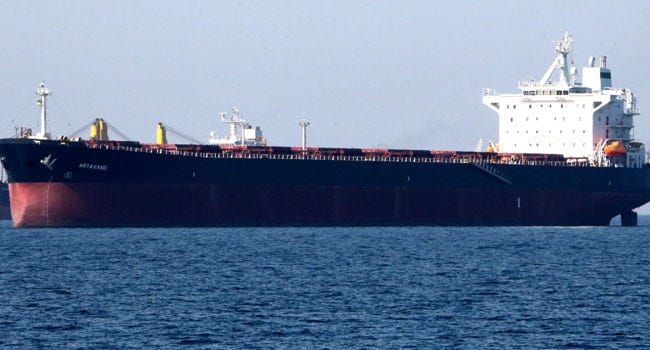
President Donald Trump has rejected a truce proposal from Iran. Tehran said the deal could have reopened the Strait of Hormuz to shipping within a week. Trump announced the rejection on Saturday outside the White House. “I reject their proposal,” he said. “They made a proposal but I’ve rejected it.” He added that Iran wants a deal “because they’re losing so badly.” The standoff is now nearly seven months old.
The Strait of Hormuz carries about a fifth of global oil. It has been a flashpoint for decades. In 2019, tanker attacks near the strait raised tensions. In 2024, Iran seized vessels in the waterway. The current conflict began earlier in 2026. Washington and Tehran signed a memorandum of understanding in June. It aimed to end the war, reopen the strait and start talks on Iran’s nuclear programme. The deal collapsed when Iran fired on commercial ships it accused of deviating from approved routes. Iran requires ships to obtain authorisation before passage. Vessels that refuse are targeted. The US bombs Iranian coastal areas in retaliation.
Iran’s President Masoud Pezeshkian said the proposal was developed in coordination with Supreme Leader Mojtaba Khamenei. Foreign Minister Abbas Araghchi said the plan requires a cessation of all hostilities in the Middle East, including Lebanon. It also requires the release of frozen Iranian assets, the lifting of sanctions on Iranian oil and an end to the US naval blockade. On the seventh day of the truce, Iran would reopen Hormuz. “The process will begin from the very day they accept it,” Pezeshkian said.
Trump is sceptical. The Wall Street Journal reported that he doubts Tehran will meet his demands and expects to renew bombing. He posted an image on Truth Social showing the strait circled and labelled “Trump Strait.” Iran’s Revolutionary Guards spokesman, Hossein Mohebi, said: “We will not cease punishing the US until Iran’s seven conditions are met.” Tehran also demands an end to hostilities in Yemen.
At the UN, Saudi Arabia’s Foreign Minister, Faisal bin Farhan, complained that the international community “has been absent.” He said the kingdom rejects any party using the vital passages as a tool for pressure. Russia’s Sergei Lavrov said Moscow stands ready to help stabilise the region. Pezeshkian met UN Secretary-General Antonio Guterres and said Iran “has not walked away from the negotiating table” but “no longer trusts the United States.”
This is not a distant Gulf dispute. The strait’s closure is the single largest external driver of the crude price spike that has pushed Nigerian petrol past ₦1,500 per litre. The CPPE has warned that a return to universal subsidy at these prices would cost about ₦19 trillion annually. The Dangote refinery’s export margins depend on stable shipping lanes. Insurance costs for Gulf cargoes feed into landing costs. Every day the strait stays shut, Nigeria’s import bill and pump prices feel it.
Winners: Russia and Qatar, which position themselves as mediators. Saudi Arabia, which gains a platform. US shale producers, who benefit from high prices. Iran’s Revolutionary Guards, which tighten their grip on domestic power. Losers: Nigerian households, who face higher transport and food costs. The Dangote refinery, whose export plans face shipping risk. Global shipping lines, which pay war-risk premiums. Iran’s economy, which remains under sanctions and blockade. Trump, if the stalemate drags into 2027.
Bottom Line: Trump rejected Iran’s plan. The strait stays shut. Crude stays above $100. Nigeria pays the price at the pump. This is what happens when a domestic cost-of-living crisis has an external cause Abuja cannot control.