


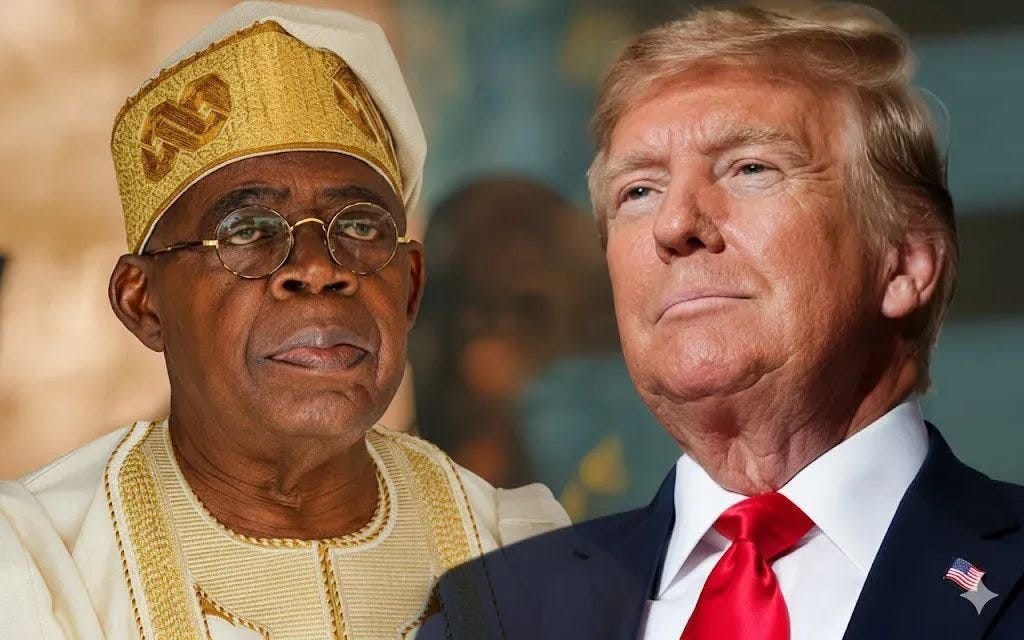
United States President Donald Trump has praised President Bola Tinubu for his leadership in tackling terrorism and insecurity in Nigeria, particularly attacks on Christian communities. In a letter dated July 6, 2026, Trump commended Tinubu’s efforts and reaffirmed Washington’s commitment to supporting Nigeria’s fight against terrorism. He described the U.S.-Nigeria relationship as vital amid rising security threats across West Africa and highlighted the 2026 Defence Cooperation Roadmap as a key framework for joint action.
Trump also noted that U.S. Special Operations Forces have been deployed to train and support the Nigerian Armed Forces through intelligence sharing and capacity building. According to the Presidency, bilateral security cooperation has expanded through a Joint Working Group, contributing to recent joint operations, including a May offensive against ISIS hideouts in the Lake Chad region. The United States has also pledged to deepen broader security cooperation with Nigeria.
The letter is a significant diplomatic victory for Tinubu. The US President’s endorsement of his counter-terrorism efforts strengthens Nigeria’s international standing and signals continued US support for the country’s security challenges. The deployment of US Special Operations Forces is a concrete demonstration of that support, providing Nigerian troops with training and intelligence that could improve their effectiveness against terrorist groups.
However, the praise also reflects a relationship of convenience. The US has strategic interests in the Lake Chad Basin and the broader Sahel, where jihadist groups are expanding. Nigeria’s cooperation is essential to those interests. The question is whether the US support will translate into lasting improvements in Nigeria’s security or just another round of training that fades once the trainers leave.
This echoes the 2015 US military assistance to Nigeria under President Obama, which also involved training and intelligence sharing. The mechanism then was different, but the result was the same: a relationship driven more by US strategic interests than by Nigeria’s needs.
The winners: President Tinubu, who gains international validation; and the Nigerian military, which benefits from US training and intelligence. The losers: terrorist groups, who face increased pressure; and the Nigerian public, who have yet to see the benefits of the security cooperation.
Bottom Line: Trump has praised Tinubu’s counter-terrorism efforts. US Special Forces are training Nigerian troops. The relationship is strong. The question is whether it will deliver results on the ground or remain diplomatic rhetoric.