


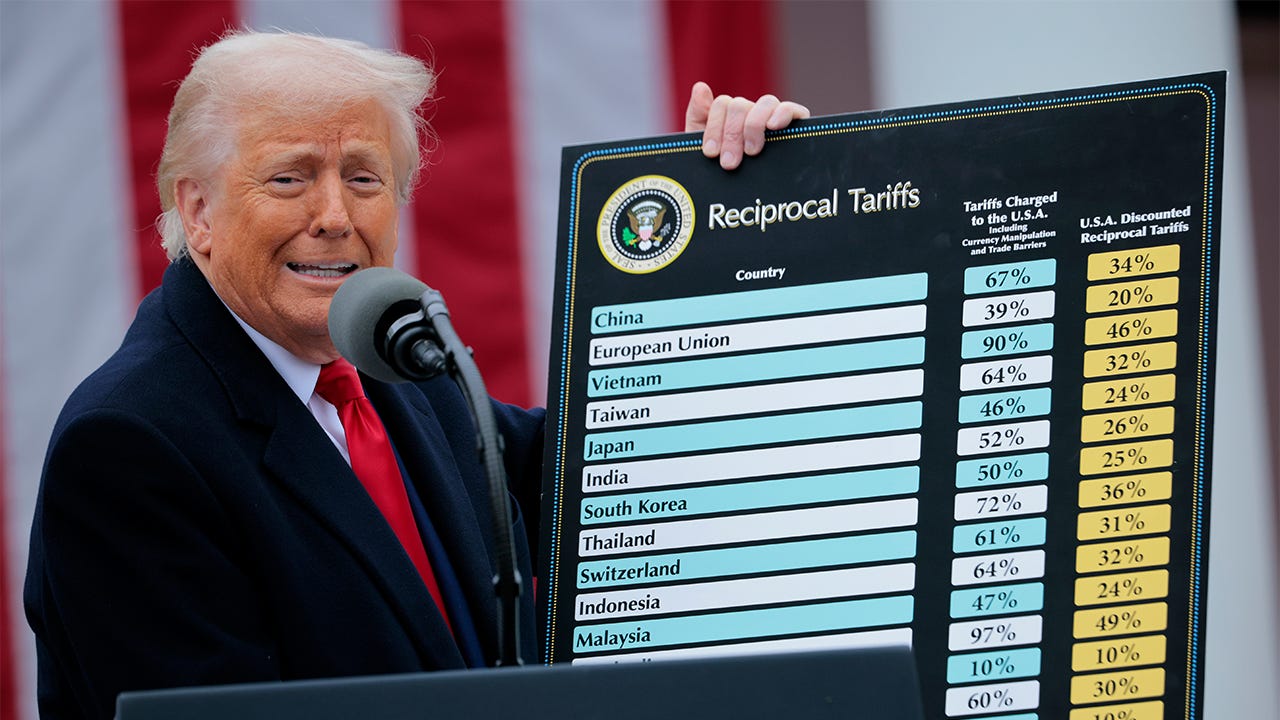
Nigeria made the list as US President Donald Trump launched a fresh wave of tariffs on 60 trading partners of the United States. The tariffs range from 10 percent to 12.5 percent. Goods from the affected trading partners make up 99.4 percent of US imports. The administration claims that the affected countries failed to properly tackle the importation of goods produced with forced labour.
The tariffs come as the 10 percent global levy earlier imposed in February by the Trump administration elapses. Jamieson Greer, US trade representative, said the tariffs took effect Thursday at the president’s directive. “Today’s action will begin to correct what is both a human rights abuse and distortive trade practice to improve the welfare of workers everywhere,” Greer said in a statement.
The levy would be imposed on all goods coming from Nigeria and other countries, excluding raw materials that could lead to the unavailability of domestic supply, products that could cause economy-wide disruptions, products that cannot be grown or produced in sufficient quantities in the US or obtained from other sources. It is the latest escalation in the global trade war reignited by Trump since he returned to the Oval Office last year. In April, Trump announced sweeping global tariffs on all imports into the country, slamming 14 percent on Nigeria. Later in August, Nigeria and a raft of African countries were hit with a 15 percent import tariff following an executive order from Trump.
Most of the countries affected, including Canada, which was just hit with fresh taxes on Monday, have kicked against the new order. Australia and Brazil described the new tariffs as unjustified, saying they would seek to have them removed, while Norway said there was “no basis” for them. The European Union (EU) said Washington’s rationale did not make sense. China called the move “political manipulation”.
The Nigerian stake is direct. The tariffs will make Nigerian exports to the US more expensive, potentially reducing demand and affecting Nigerian exporters. The exclusion of raw materials suggests that Nigeria’s oil exports, its largest export to the US, may be exempt. However, other exports, including agricultural products and manufactured goods, could be affected.
From a Nigerian vantage point, the tariffs are a reminder of Nigeria’s vulnerability to external shocks. The country’s exports are concentrated in a few commodities, and any disruption to trade can have significant economic consequences. The Nigerian government must diversify its export base and reduce its dependence on the US market.
This echoes the 2025 US tariffs on Nigeria, which also targeted a range of products. The mechanism then was different, but the result was the same: Nigerian exporters facing higher costs and reduced competitiveness.
The winners: the US administration, which is making a political statement; and domestic US producers, who face less competition. The losers: Nigerian exporters, who face higher costs; and the Nigerian economy, which suffers from reduced trade.
Bottom Line: The US has hit Nigeria with a 12.5% tariff over forced labour claims. Nigeria’s exports are in the crosshairs. The question is whether Nigeria can diversify before the trade war escalates further.