

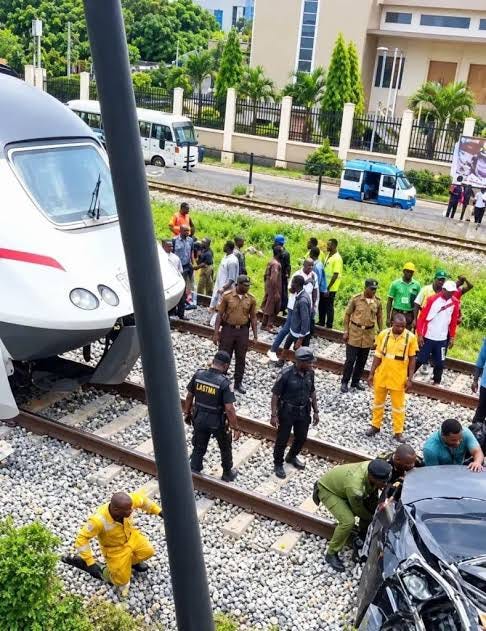
A train heading towards Agege hit a Honda car at the railway crossing near PWD Bus Stop in Ikeja, Lagos, on Friday morning. The vehicle, registration EKY 902 JT, was badly damaged. The driver, aged 55, escaped unhurt. Lagos State Traffic Management Authority officials and security personnel pulled him out, cleared the wreckage from the tracks and managed the traffic that followed.
Lagos has level crossings where road and rail share the same ground. Most are unbarriered or manually controlled. The corridor through Ikeja, Agege and Iju carries commuter traffic and the Red Line rail service. In 2023, a train struck a Lagos State staff bus at a crossing, injuring dozens. In 2024, another collision along the same corridor injured passengers. The pattern repeats because crossings are neither automated nor reliably staffed, and enforcement of stop rules is thin.
That is the whole story LASTMA has given us, and it is not enough. Nobody has said whether the barrier was down. Nobody has said whether a gateman was on duty. The Nigerian Railway Corporation has not issued a statement. There is no word on how many other people were in the car. There is no mention of injuries among pedestrians or rail passengers. The wreckage was cleared. The traffic was managed. The file closed itself.
A man walked away from a train. His Honda did not. That is the sentence the state wants us to accept. It tells us nothing about why a busy crossing in the heart of Ikeja allowed a car onto the rails in daylight.
Winners: The driver, who survived. LASTMA, which cleared the scene. No one else. Losers: The driver, who lost a vehicle. Road users, who sat in the congestion. Rail passengers, whose service was delayed. Lagos residents, who face the same crossing tomorrow.
Bottom Line: One man survived a train. The crossing stayed open. Nobody explained why. Until the barriers, signals and staffing at Lagos level crossings are fixed, the next collision is only a matter of time.