


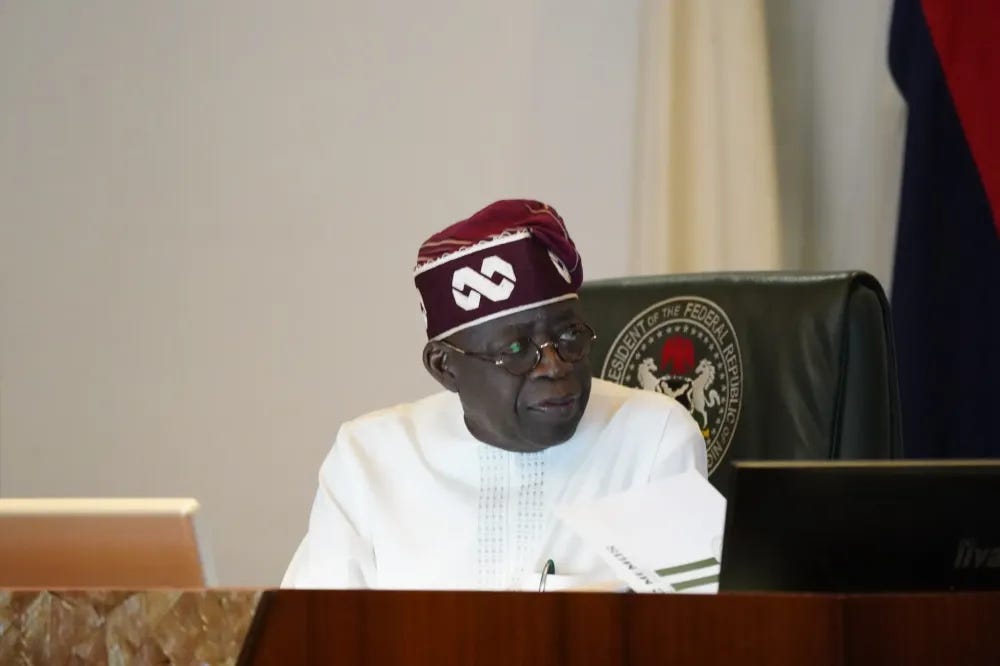
President Bola Tinubu has formally transmitted a modified borrowing request to the Senate. The earlier $20.52 billion external framework has been scaled down to $7.7 billion. The new request is about ₦10.79 trillion at the budget rate of ₦1,400 to the dollar. It will part-finance the 2026 budget deficit of about ₦31.4 trillion. The letter was dated 26 October and read at plenary on 4 November.
The 2026 Appropriation Act authorises ₦29.2 trillion in new borrowing. That comprises ₦18.4 trillion domestic and ₦10.79 trillion external. Nigeria’s public debt stood at ₦159.28 trillion at the end of 2025. Debt service alone took about ₦16 trillion that year. The 2026 budget sets aside ₦15.81 trillion for debt service, nearly a quarter of the ₦68.32 trillion appropriation. The government has approved multiple borrowing plans this year, including $6 billion in March and a $516.3 million Deutsche Bank facility for the Sokoto-Badagry Superhighway.
Senate President Godswill Akpabio said the new letter supersedes the earlier request because it is more explicit on how the money will be raised. It lists concessional and commercial loans, IMF facilities, bridge financing and Eurobonds. It stresses Eurobonds as faster and able to raise larger sums. Akpabio referred the request to the Committee on Local and Foreign Debts.
The shift from $20.5 billion to $7.7 billion in one week raises questions. Which projects were dropped? Why was the first request so large? The government has not explained. The timing is sensitive. The election is in January. A loan approved during campaign season invites suspicion. The government says the funds will support defence, transport, agriculture, power, education and healthcare.
Winners: The Federal Government, which gains financing. Contractors, who gain projects. Foreign lenders, who gain a borrower. Losers: Taxpayers, who service the debt. Future generations, who inherit it. Domestic borrowers, who face higher rates. Sectors that miss out on spending. Critics who see the borrowing as reckless.
Bottom Line: The request shrank by two-thirds in a week. The government still needs the money. The Senate must scrutinise the terms. Borrowing without visible results is a trap.