


President Bola Tinubu has admitted that water supply problems also affect the Presidential Villa in Abuja, recounting how his shaving routine was interrupted when water stopped flowing at Aso Rock.
The President made the revelation on Sunday, November 22, during a special prayer organised by his family at the Yoruba Tennis Club in Onikan, Lagos.
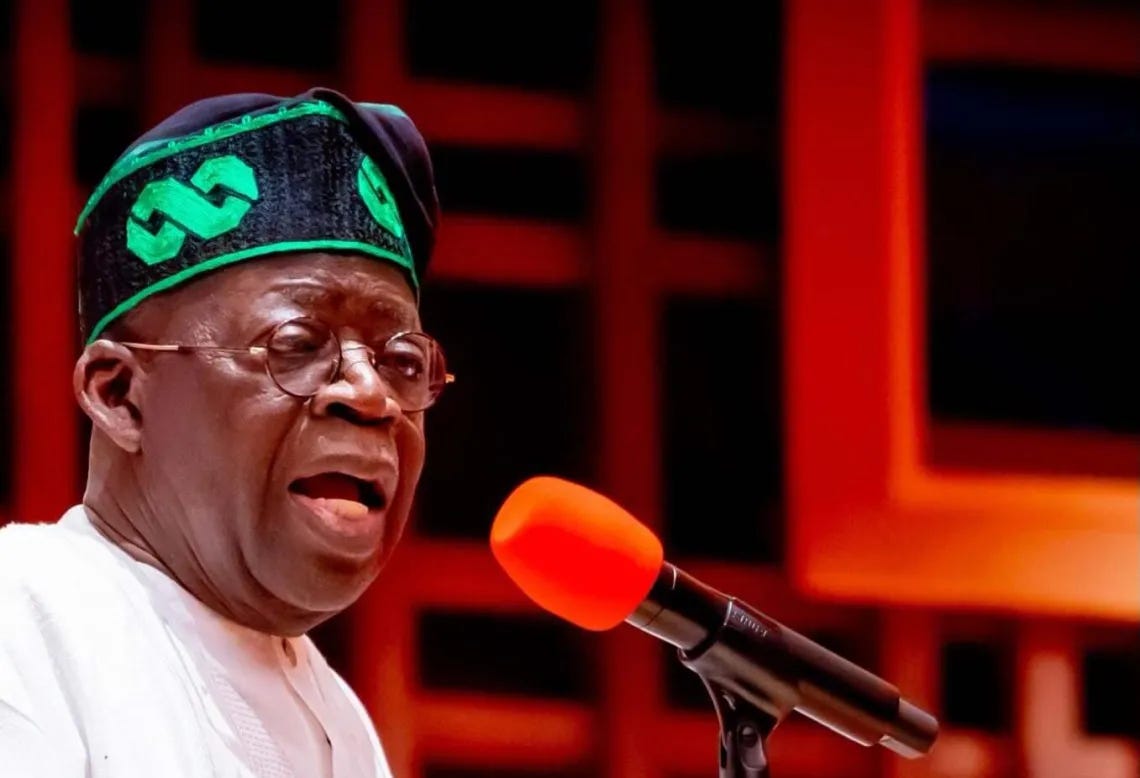
According to Tinubu, the incident happened on Wednesday, November 18, despite the Presidential Villa being the official residence of Nigeria’s president.
“If I tell you some of you, you know, on a Wednesday of last week, I was shaving and the water went off. In the Villa. You know, you want no punishment, they’re there too. The water went off,” he said.
Tinubu acknowledged that Nigeria continues to struggle with basic infrastructure, particularly electricity and water supply. He, however, expressed confidence that his administration would address the problems.
“We will correct all these, no light, no water, no electricity, no development. We have just started. We can do it and we will do it for Nigeria,” he added.
But there is something striking about the President’s account. If water supply can become unreliable at Aso Rock, what does that say about the condition of public infrastructure across the country?
For millions of Nigerians, water shortages are not occasional interruptions during a morning routine. They are daily problems that determine how families cook, wash, clean and maintain basic hygiene.
In many communities, residents depend on private boreholes, water vendors and wells because public water supply remains unreliable. Families without access to these alternatives often spend a significant part of their income securing water.
The President’s experience therefore offers an unusual glimpse into a problem that ordinary Nigerians have struggled with for years. However, the account does not establish whether the interruption at the Villa resulted from a temporary technical fault or a wider supply problem.
The Presidency has also committed substantial resources to improving electricity supply at the same facility. The administration has spent billions of naira on power infrastructure, including solar installations intended to reduce the Villa’s dependence on the national grid.
That raises another question. If the seat of power requires significant investment to maintain reliable electricity and water, how much more difficult is the situation in communities with weaker infrastructure and limited public investment?
Tinubu’s comments also come as his administration faces growing scrutiny over electricity supply, the cost of living and the delivery of basic services.
At the same gathering, the President shifted attention to the 2027 general election, urging his supporters in Lagos to mobilise voters and ensure that more registered residents participate in the polls.
He questioned why Lagos, with about seven million registered voters, could produce only 100,000 or 200,000 votes in an election.
“How can you have seven million registered voters and produce 100,000, 200,000 votes? That’s failure,” he said.
Tinubu also directed his Special Adviser on Political Affairs, Ibrahim Masari, to reconcile aggrieved members of the All Progressives Congress (APC), beginning with Katsina before extending the effort to other states.
The President’s remarks place two priorities side by side: fixing Nigeria’s infrastructure and strengthening his political support ahead of another election.
For ordinary Nigerians, however, the immediate concern is less about political mobilisation and more about whether government promises will translate into reliable public services.
The winners from meaningful improvements would be households, businesses and communities that currently spend money accessing water and alternative electricity. But Nigerians will remain the losers if the administration continues to acknowledge these problems without delivering measurable improvements.
Bottom Line: Tinubu’s experience at Aso Rock may sound familiar to millions of Nigerians, but familiarity is not a solution. The President has acknowledged the problem. His administration must now demonstrate that it can provide the basic services that citizens have waited years to enjoy.