


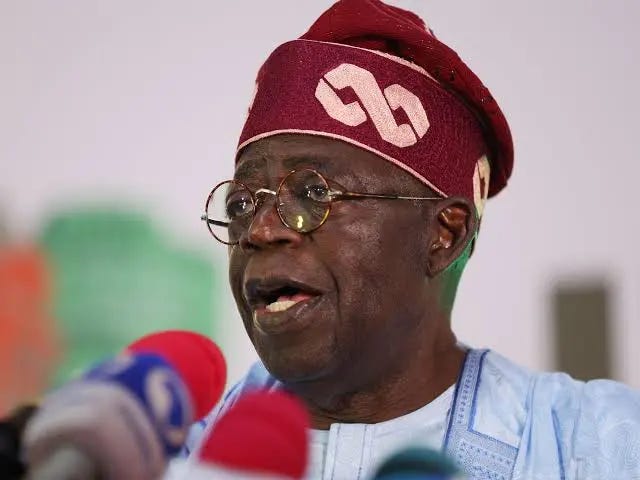
President Bola Tinubu is expected to return to Nigeria on Tuesday, 29 September 2026, ending a four-week working vacation in Europe. He will mark Nigeria’s 66th Independence Anniversary in Lagos on Thursday, 1 October, before returning to Abuja next weekend.
This would be the second time Tinubu celebrates Independence Day in Lagos as president. He will deliver a national broadcast and attend the premiere of a documentary honouring MKO Abiola, the presumed winner of the annulled 12 June 1993 election.
The return closes a chapter that raised constitutional questions. Section 145 of the 1999 Constitution requires the president to transmit a written declaration to the National Assembly before proceeding on leave. No one has publicly confirmed whether Tinubu transmitted that declaration.
Lawmakers under the Save Democracy Group had demanded the National Assembly reconvene to determine whether the President complied with Section 145. The group, led by Awaji-Inombek Abiante and Abubakar Kusada, argued that if no declaration was received within 21 days, Section 145(2) requires both chambers to pass a simple-majority resolution making Vice President Kashim Shettima Acting President.
The Presidency maintained that Tinubu remained in contact with officials and continued to direct government affairs from abroad. While away, he ordered an independent panel to investigate the deaths of 37 illegal miners in Minna. Vice President Shettima represented him at some official engagements before travelling to New York for the United Nations General Assembly on 20 September.
This echoes the 2009-2010 crisis when President Umaru Yar’Adua left for medical treatment in Saudi Arabia without transmitting a declaration. For three months, Nigeria operated without a formally empowered president. The Federal Executive Council eventually invoked a “doctrine of necessity” to make Goodluck Jonathan acting president.
The difference now is that Tinubu returns voluntarily. The constitutional ambiguity resolves itself through his physical presence. But the precedent remains. A president can leave for four weeks without formal legislative notification, and the system absorbs it.
Winners: Tinubu, who returns without having faced formal legislative challenge. Vice President Shettima, who gained de facto executive authority without formal accountability. Losers: The National Assembly, which never received the declaration and never forced the issue. The Save Democracy Group, whose demands for reconvening went unanswered. The Nigerian public, which watched a constitutional question dissolve without resolution.
Bottom Line: The President returns, and the question disappears. The next absence will raise it again. The National Assembly should answer it before then.