


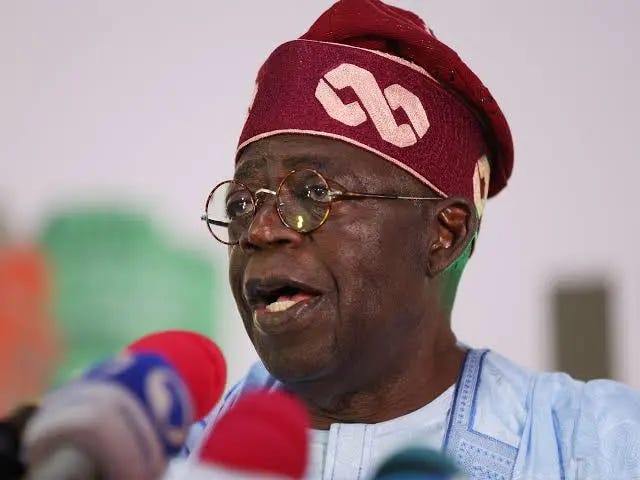
President Bola Tinubu has declared that reducing the cost of living is now his administration’s top priority. In a nationwide broadcast on Thursday, 1 October, marking Nigeria’s 66th Independence Anniversary, Tinubu said his government would lower the cost of producing and moving goods Nigerians consume.
Tinubu’s address, titled “From Reform to Prosperity,” framed the past three years as a painful but necessary treatment for a sick economy. He likened Nigeria to a cancer patient who must choose between difficult treatment and palliative care that allows the disease to spread. “Leaders before me chose morphine while praying for a miracle that never came,” he said.
He insisted that his administration’s reforms, including the removal of petrol subsidies and the unification of the exchange rate, did not create the weaknesses in the economy but confronted them. “As certain influential but regressive voices would have us abandon the treatment and return ourselves to the abuse of addictive subsidies, we must resist their siren song,” he said.
Tinubu cited economic growth of over 4 per cent in 2026, with both oil and non-oil sectors contributing. He promised a Nigeria where factories have reliable power, businesses can obtain credit and young people can find productive work. “Our priority is to bring down the cost of living,” he said. “We will achieve this by lowering the cost of producing and moving the things Nigerians consume”.
This mirrors the structural challenge of communicating economic reform in a country where the pain is immediate and the gains are delayed. Tinubu’s cancer analogy captures the tension. But the patient in the metaphor did not have to choose between treatment and food. Nigerian households are making that choice daily. The question is whether the treatment is working fast enough to prevent the patient from losing faith.
Winners and Losers
Winners: Tinubu, who reclaims the reform narrative and sets a new phase labelled “age of prosperity.” The Federal Government, which can point to 4 per cent growth as evidence that the medicine is working.
Losers: Nigerians grappling with high food prices, transport costs and stagnant wages. Opposition parties, who must now argue against a President who has claimed the mantle of reformist.
Bottom Line: A speech cannot lower the cost of living. Tinubu has set the target. The test is whether the policies that follow reduce the price of bread, transport and fuel at the point of purchase.