


President Bola Tinubu has promised Nigerians better electricity supply, saying his administration will continue attracting industries and improving the power sector.
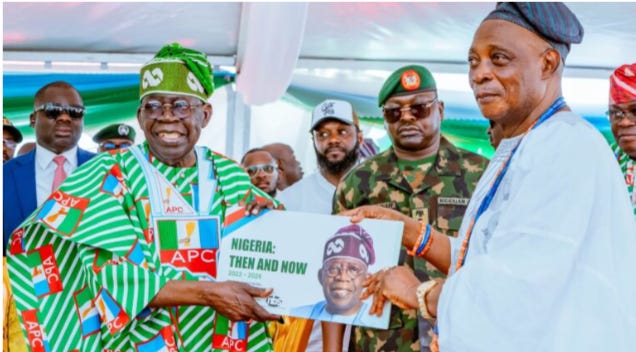
He made the commitment on Saturday, 21 November, at the All Progressives Congress (APC) presidential campaign rally in Ibadan, Oyo State. He said Joseph Tegbe and his team were working hard to improve electricity. Tinubu also announced an agreement with Chinese company Yutong to reopen the old Leyland factory in Ibadan. The facility, he said, would produce public transport vehicles and support automobile assembly.
The two promises are connected. Manufacturing needs reliable electricity to operate machinery, maintain production schedules and control costs. Without it, a reopened factory may create jobs, but it will still face the high cost of generating its own power.
Nigeria’s electricity figures show the scale of the challenge. The Nigerian Electricity Regulatory Commission (NERC) reported that grid-connected plants generated an average of 4,022 megawatt-hours per hour in the second quarter of 2026. It also reported that only 62 per cent of active customers had meters.
The figures point to a sector that is producing electricity but still struggling with distribution, metering and commercial losses. NERC’s October 2026 factsheet put average available generation capacity at 4,744 megawatts and actual average generation at 4,047 megawatts. It also recorded breaches of prescribed grid frequency and voltage limits.
That gap matters to households and businesses. Families must plan around unreliable supply, while manufacturers spend more on diesel and alternative power. Those costs eventually affect prices, jobs and the competitiveness of locally made goods.
The winners from a genuine improvement would include households, manufacturers, small businesses and workers. Yutong and other investors could also benefit if the factory agreement produces sustained operations. The losers would be businesses and consumers who continue bearing the cost of unreliable supply, alongside investors whose plans depend on infrastructure that does not deliver.
Tinubu’s promise is welcome, but Nigerians need more than assurances. They need measurable targets, timelines and regular public reporting on generation, transmission and distribution. The government must also show how the Yutong agreement will translate into actual production and jobs.
Bottom Line: Better electricity will be measured by what reaches homes and factories, not by what is promised at campaign rallies.