


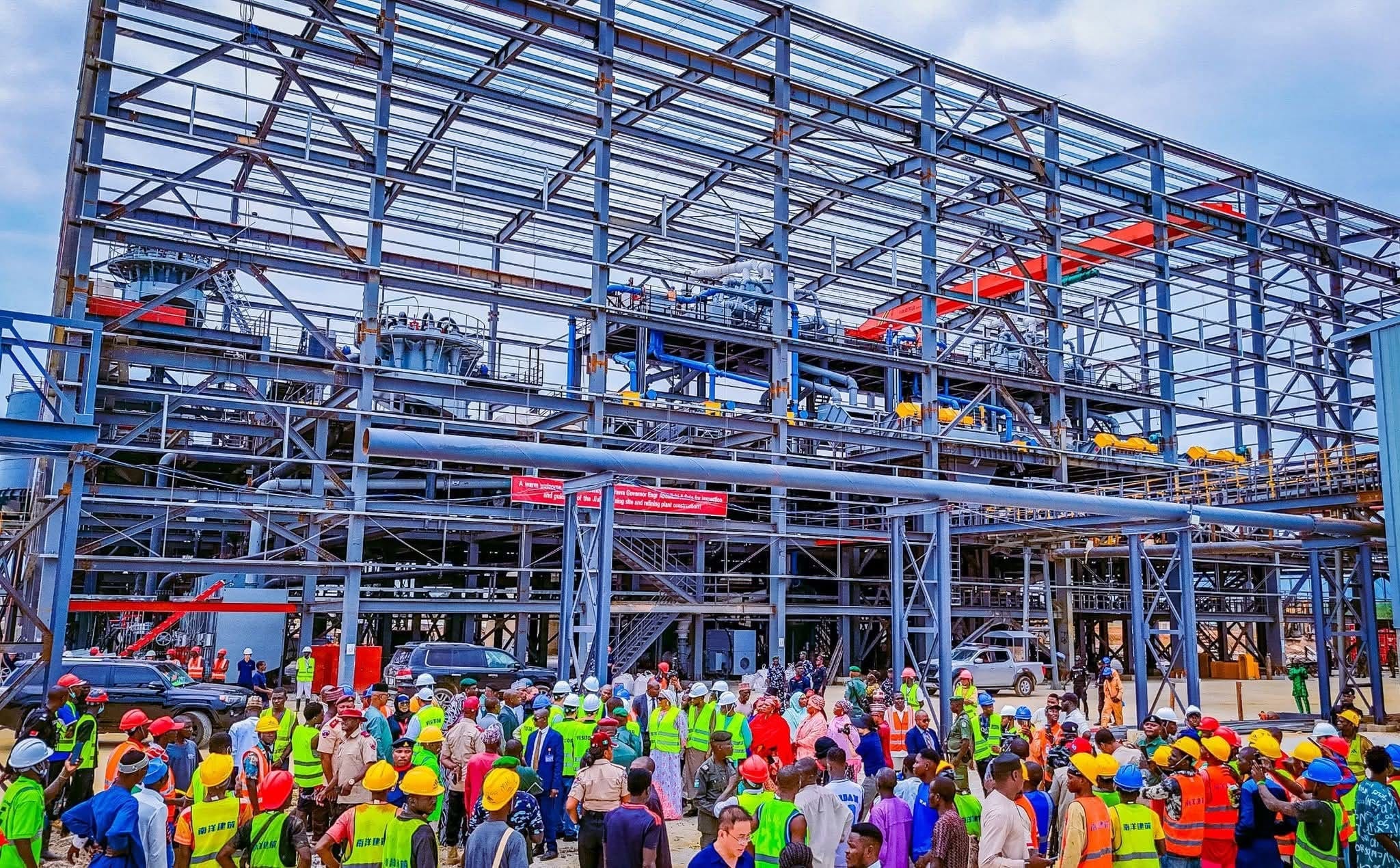
President Bola Tinubu has inaugurated what the Federal Government described as West Africa’s largest lithium processing plant in Nasarawa State, stating that Nigeria must shift from exporting raw minerals to processing them locally to create jobs and drive industrial growth. The facility, located in the Endo community, Nasarawa Local Government Area, has a daily processing capacity of 6,000 metric tonnes and an annual capacity of 3,000,000 metric tonnes.
The President, represented by Vice President Kashim Shettima at the inauguration on Thursday, said the plant reflects the government’s commitment to developing the solid minerals sector through local value addition. “Natural resources may be a blessing, but only vision can turn them into wealth. Only institutions can protect that wealth. Only industry can multiply it, and only people can give it meaning,” he said.
He stated that Nigeria must move deliberately from extracting raw minerals to processing them locally and producing finished goods. “What changes a nation is a deliberate movement from extraction to processing, from potential to production, from raw materials to value-added goods, and from isolated investments to integrated industrial ecosystems,” he added.
The President described lithium as one of the world’s most strategic minerals because of its growing importance in battery production, electric vehicles and renewable energy technologies. The company operating the facility said the project has created more than 1,000 direct jobs and over 2,000 indirect jobs since operations began.
The inauguration comes days after the Minister of Solid Minerals Development, Dele Alake, announced the discovery of what the government described as a world-class polymetallic mineral province in Kaduna State containing deposits of platinum group metals, gold, nickel, copper, lithium and rare earth elements. Alake said the discovery ranks among the most significant developments in Nigeria’s mining sector in recent years.
This mirrors the 1970s oil boom era, when Nigeria exported crude oil without building refining capacity. The result was decades of lost value and dependence on imported fuel. The lithium plant is an attempt to avoid the same mistake with critical minerals. The question is whether it is the beginning of a new industrial policy or a one-off project.
The winners: local communities that gain jobs, and the Nigerian economy, which keeps more value from its minerals. The losers: foreign buyers who previously bought raw lithium at low prices, and anyone expecting the plant to solve Nigeria’s industrialisation challenges overnight.
Bottom Line: West Africa’s largest lithium plant is open. The hard part, building an entire industry around it, is just beginning.