


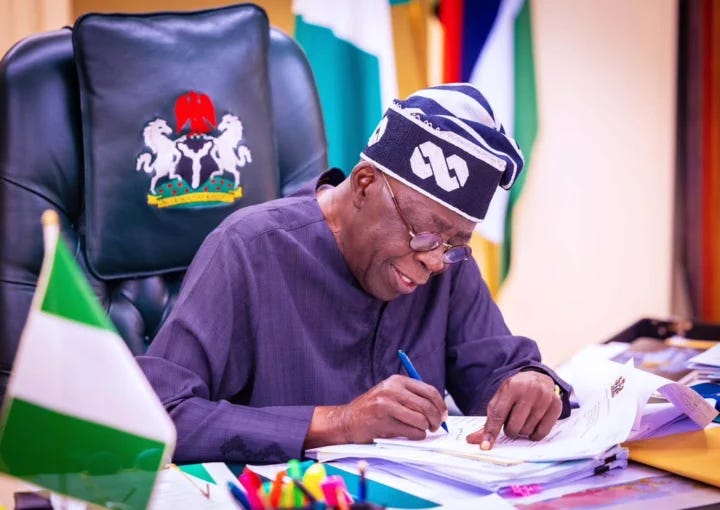
President Bola Tinubu has nominated four new national commissioners and two resident electoral commissioners to the Independent National Electoral Commission. The nominations were announced on Friday by Bayo Onanuga, Special Adviser to the President on Information and Strategy. The appointments are subject to Senate confirmation. Tinubu urged the Senate to expedite the process ahead of the general elections next January.
INEC has faced criticism over the political affiliations of its officials. In 2021, the Senate screened Lauretta Onochie, a presidential aide, as a national commissioner despite opposition protests. Civil society groups challenged her nomination in court. In 2026, the Archbishop Emeritus of Abuja, Cardinal John Onaiyekan, said INEC cannot be independent when the president appoints its leadership. Section 156 of the Constitution governs eligibility. The current nominations follow the expiration of tenures.
Dr Bala Bila, the national commissioner representing the North East, was reappointed. Professor Mustapha Aliu will replace Professor Abdullahi Zuru as the North West representative. Bashir Muhammed Umar will replace Professor Muhammad Adamu as the North Central representative. Mrs Oluwatoyin Babalola, the resident electoral commissioner in Osun, was nominated as the new South West national commissioner. She will replace Professor Cornelius Ajayi, whose tenure expires on 24 October. The two new resident electoral commissioners are retired permanent secretary Dr Samuel Akinjide Akinleye, to represent Ekiti State, and Zahradden Basiru Sanusi, from Jigawa, to replace Professor Saidu Ahmed Babura.
The nominations have generated controversy on social media. Critics question the timing. The 2027 election is approaching. The Senate must screen and confirm the nominees. The process will be scrutinised. INEC’s credibility depends on it.
Winners: The nominees, who gain positions. Tinubu, who shapes the commission. The Senate, which gains a confirmation role. Losers: Critics who see political influence. Civil society, which has demanded reform. INEC, whose independence is questioned. Voters, who must trust the process. The opposition, which faces a commission it did not choose.
Bottom Line: Four national commissioners. Two RECs. The nominations are political. INEC’s independence is contested. The Senate must screen them. The 2027 election will test their credibility.