


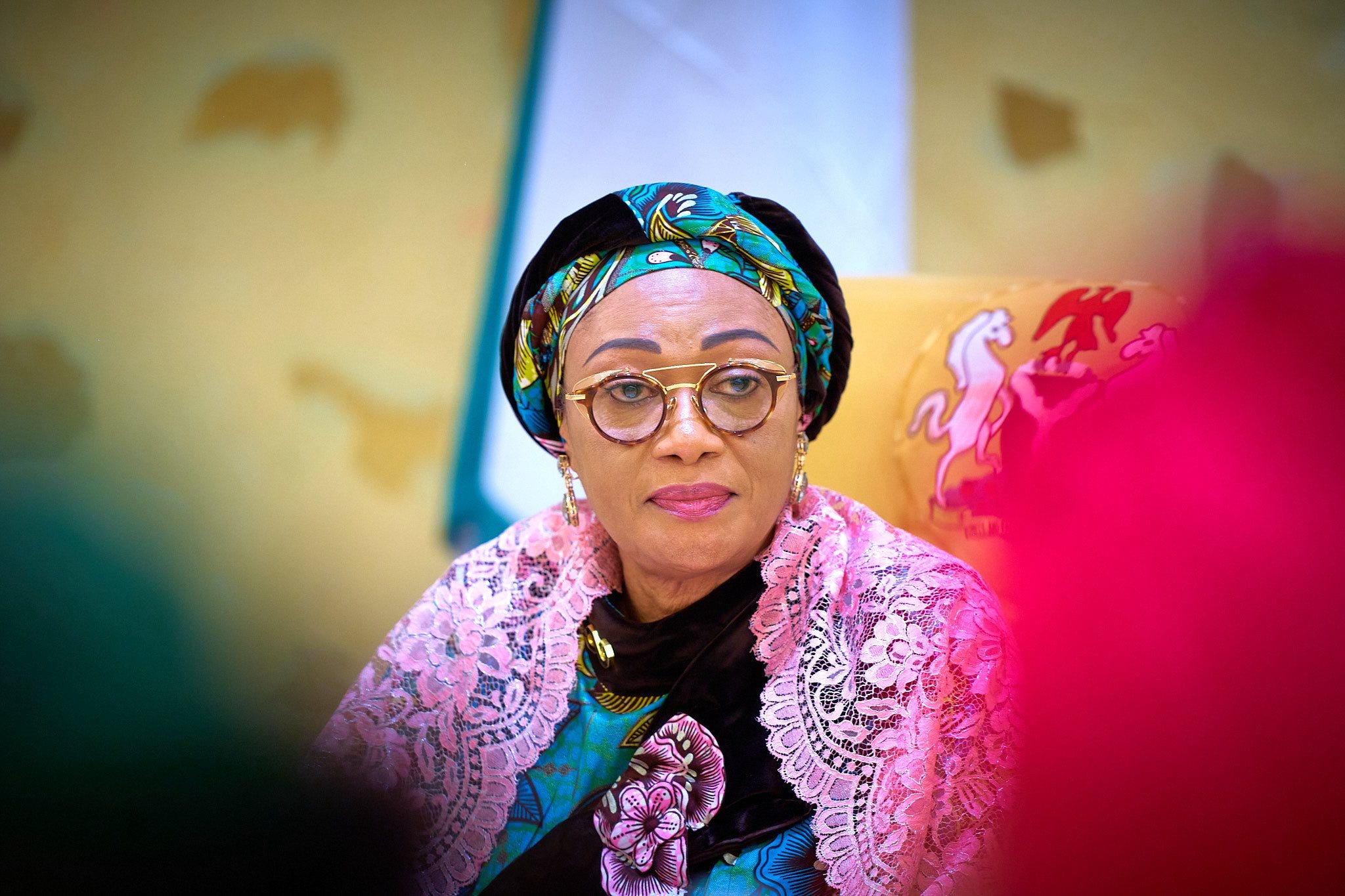
President Bola Tinubu has joined the online trend surrounding the First Lady, Senator Oluremi Tinubu, playfully referring to her as “Iya Alakara,” the mother of an akara seller. The remark, made during the inaugural Presidential Press Corps Dinner at the State House in Abuja, was widely interpreted as a light-hearted reference to the recent public conversation sparked by the First Lady’s comments on small-scale businesses.
While acknowledging guests at the event, the President said: “Good evening, gentlemen of the press, ladies and gentlemen, my dear wife, the First Lady, Iya Alakara.”
The comment followed recent remarks by Senator Oluremi Tinubu, who encouraged Nigerians, particularly women, to explore small-scale businesses such as selling akara, roasted corn and kuli-kuli as viable means of earning a living amid prevailing economic challenges. The comment sparked a viral reaction online, with many Nigerians sharing their own experiences with street food businesses and debating the practicality of the First Lady’s advice.
The cultural significance of the akara seller goes beyond the joke. Akara, a deep-fried bean cake, is a staple of Nigerian street food, sold by women at bus stops and markets across the country. The First Lady’s suggestion that Nigerians should consider selling it as a livelihood option was met with a mix of appreciation and mockery, with some praising her acknowledgment of small-scale enterprise and others pointing out the gap between the political elite and the everyday struggles of street vendors.
Beyond the light-hearted moment, President Tinubu used the occasion to highlight what he described as positive economic indicators under his administration. “The economy is stabilising. Public revenues are strengthening, foreign reserves have risen above $50 billion, investors’ confidence has returned, and the oil and gas sector is attracting fresh investments,” he said.
On security, the President said military operations had intensified, intelligence gathering had improved, and collaboration among security agencies had resulted in the neutralisation of thousands of terrorists and criminal elements, the rescue of hostages, and the recovery of communities previously under attack. He reaffirmed his administration’s commitment to restoring peace and security across the country. “We remain resolute in our commitment to secure every part of our country so that every Nigerian can live and prosper in peace,” the President said.
The “Iya Alakara” moment is a reminder that Nigerian politics is increasingly shaped by viral culture. The First Lady’s comments on akara selling were not a policy proposal; they were a cultural moment. The President’s playful embrace of the trend signals an awareness of the power of online conversation to shape political narratives. But there is a tension between the viral moment and the lived reality. For many Nigerians, akara selling is not a joke; it is a survival strategy. The First Lady’s comments were a recognition of that reality, and the President’s joke was a way of acknowledging the conversation without fully committing to it.
The winners: the First Lady, who has become a cultural reference point. The President, who has shown he can engage with online trends. The losers: Nigerians who took the First Lady’s advice seriously and are waiting for the government’s economic indicators to translate into better prices for their beans and oil.
Bottom Line: The President called the First Lady “Iya Alakara.” The country laughed. The question is whether the economic indicators will make the joke less funny.