


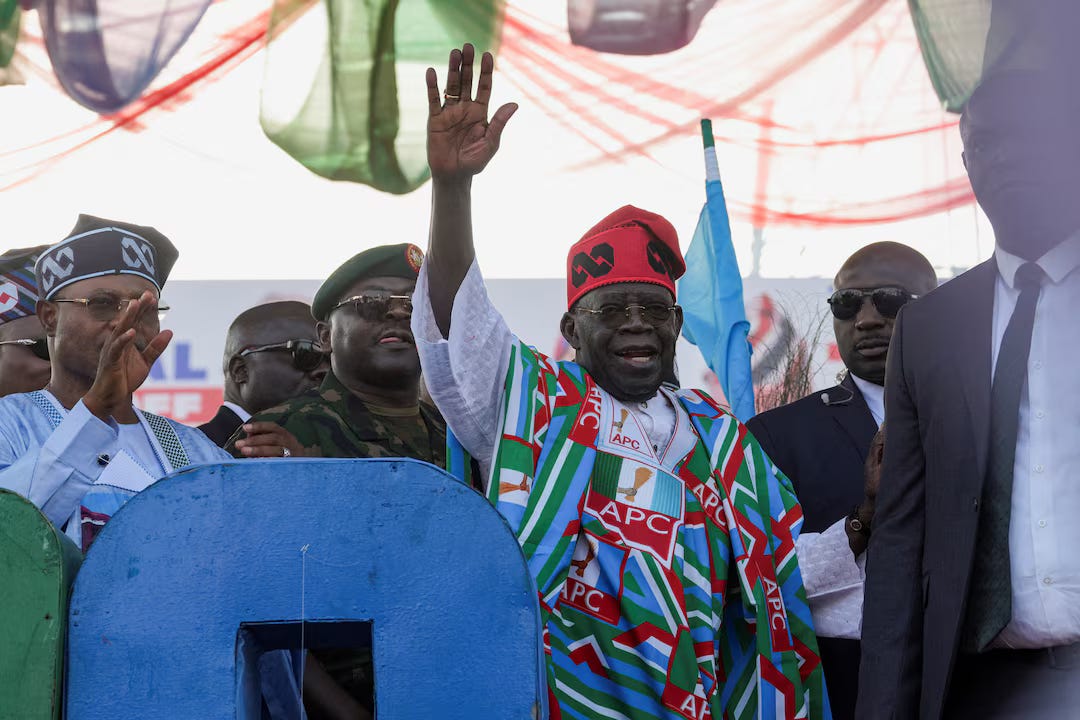
President Bola Tinubu has declared that the era of fuel subsidies is over. He spoke at the APC presidential campaign flag-off in Kaduna State. He defended his administration’s economic policies. He rejected opposition claims that the reforms are responsible for hardship. The crowd was large. The party’s leaders attended.
Tinubu removed the petrol subsidy on 29 May 2023. He announced it in his inauguration speech. Pump prices rose from about ₦185 to over ₦500 per litre. They have since climbed above ₦1,400 in many states. The naira was floated the same year. Inflation peaked at 33.2% in 2024. It has eased to 14.63% in September 2026. Reserves are at $55 billion. GDP grew 4.43% in the second quarter. The government says the reforms were unavoidable. The opposition says they were poorly sequenced.
Tinubu told the crowd the subsidy was unsustainable. He said it enriched a few and drained the treasury. “The era of fuel subsidies is over,” he said. He said his government would not return to the old regime. He cited infrastructure projects and social programmes. He said the economy is stabilising. He urged voters to support the APC in 2027.
The speech was political. Kaduna is a battleground. The North-West has the largest voter population. Tinubu won Kaduna in 2023. He needs to hold it. The flag-off marks the start of active campaigning. The APC has inaugurated its campaign council. The opposition is fragmented. Tinubu wants to consolidate.
The economy remains the central issue. Fuel prices are high. Food inflation is 19.59%. Poverty has deepened. The government says the pain is temporary. Voters will judge. The Kaduna crowd was receptive. It was also partisan.
Winners: Tinubu, who asserts his position. The APC, which shows mobilisation. The government, which defends its record. Losers: The opposition, which faces a unified APC. Nigerians who face continued hardship. Critics who see the reforms as flawed. The subsidy regime, which is formally buried.
Bottom Line: Tinubu says the subsidy is gone. He is right. The question is whether voters will accept the cost. The 2027 election will decide.