


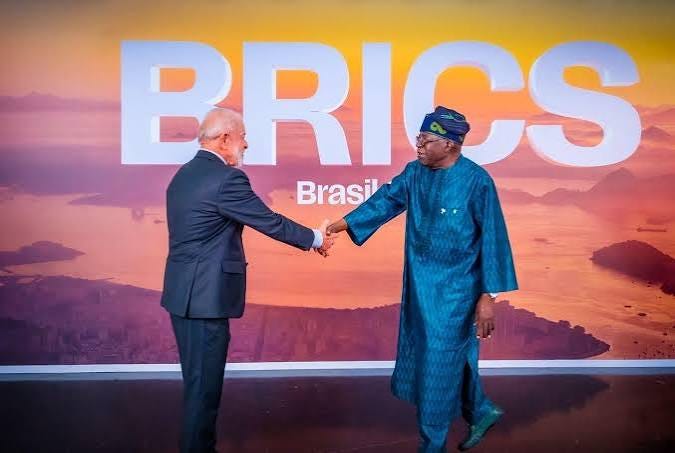
President Bola Tinubu has urged BRICS nations to rewrite the rules of global governance and finance. He made the call during Nigeria’s engagement with the bloc. His argument is that existing institutions, built after the Second World War, no longer reflect current economic realities.
BRICS, originally Brazil, Russia, India, China and South Africa, expanded in 2024 to include Egypt, Ethiopia, Iran, Saudi Arabia and the United Arab Emirates. Nigeria has debated joining for years. In 2024, the government said it was evaluating the costs and benefits. The bloc positions itself as an alternative to Western-led institutions like the World Bank and the International Monetary Fund (IMF). Nigeria’s relationship with those institutions has been fraught, from the 1986 structural adjustment programme to the 2023 subsidy removal, which the IMF and World Bank supported.
Tinubu’s intervention is a signal of intent, not a membership application. He wants Nigeria to shape the reform agenda from within the conversation. The pitch is straightforward: global financial architecture must reflect the rise of the Global South. The rules on debt, trade and development finance, he argues, were written for a different era. His framing echoes a broader push by African leaders for a stronger voice at the IMF, World Bank and United Nations Security Council.
The mechanics matter. BRICS has a New Development Bank, a Contingent Reserve Arrangement, and a push for local-currency trade. Each is an attempt to reduce dollar dependence. For Nigeria, that is attractive in theory. In practice, the naira is not a convertible currency. Nigeria’s trade is invoiced largely in dollars. Joining a de-dollarisation project without a stable currency limits the benefit. Tinubu’s call is therefore diplomatic positioning, not a concrete shift in monetary policy.
The geopolitical angle is also clear. Nigeria has traditionally balanced between Western and non-Western powers. It buys military hardware from the United States, Turkey and China. It sells oil to Europe, India and China. It wants to keep options open. Aligning too closely with BRICS risks alienating Western partners. Aligning too loosely means missing a seat at the table where the rules are being rewritten.
Winners: The Federal Government, which positions Nigeria as a Global South voice. BRICS, which gains a heavyweight African endorsement. Domestic audiences, who hear a message of sovereignty. Losers: Western partners, who see Nigeria drifting. Nigerian businesses, if any shift disrupts dollar-based trade. Multilateral institutions, which face renewed pressure to reform.
Bottom Line: Tinubu wants the rules rewritten. Nigeria’s currency and trade structure still follow them.