


President Bola Tinubu has promised Nigerians reliable power, lower living costs and job creation if re-elected in 2027. He spoke at the APC campaign rally in Dutse, Jigawa State, on Tuesday. He criticised past privatisation efforts, saying they failed to deliver consistent electricity. “We will provide reliable power, not the whole privatisation that is not working,” he said.
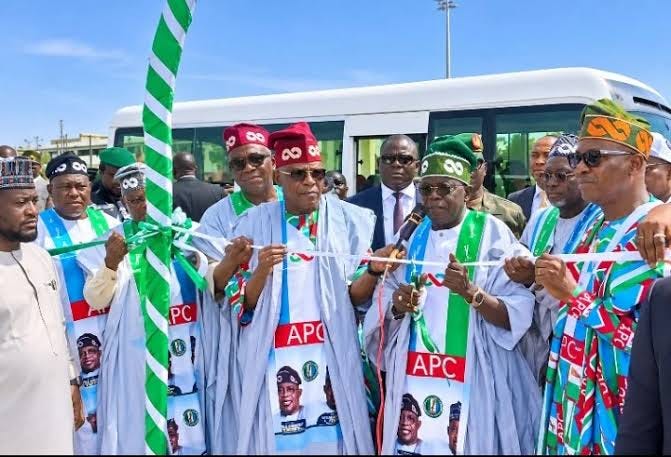
The promise is not new. Improving power was a central pledge of the 2023 campaign. In 2023, candidate Tinubu asked voters to hold him accountable for energy sector improvements. Three years later, the grid remains fragile. The power minister, Joseph Tegbe, has attributed recent disruptions to maintenance at Egbin, gas shortages and vandalism.
The historical echo is the 2015 campaign, when the APC promised 10,000 megawatts within four years. That target was missed. The 2020 privatisation of the Transmission Company of Nigeria was reversed. The pattern is a cycle of promises, partial reforms and unmet targets.
Tinubu also ruled out restoring the fuel subsidy, saying the money would go to education, agriculture and infrastructure. That is a defensible position. The subsidy was regressive and corrupt. But removing it without visible relief has a political cost, and the rally crowd in Dutse is a reminder that the cost is paid at the pump and in the market.
The winners of the promise are the campaign and the party, which gets a headline. The losers are the voters who have heard the promise before. For a tailor in Dutse running a generator, the test is not the speech. It is whether the feeder holds for six hours next month.
Winners: The APC campaign, which gets a familiar applause line. Losers: Nigerians who have heard the promise before, and any business that must budget for diesel while waiting.
Bottom Line: A promise repeated is not a plan. Reliable power needs a budget line, a maintenance schedule and a deadline, not a rally.