


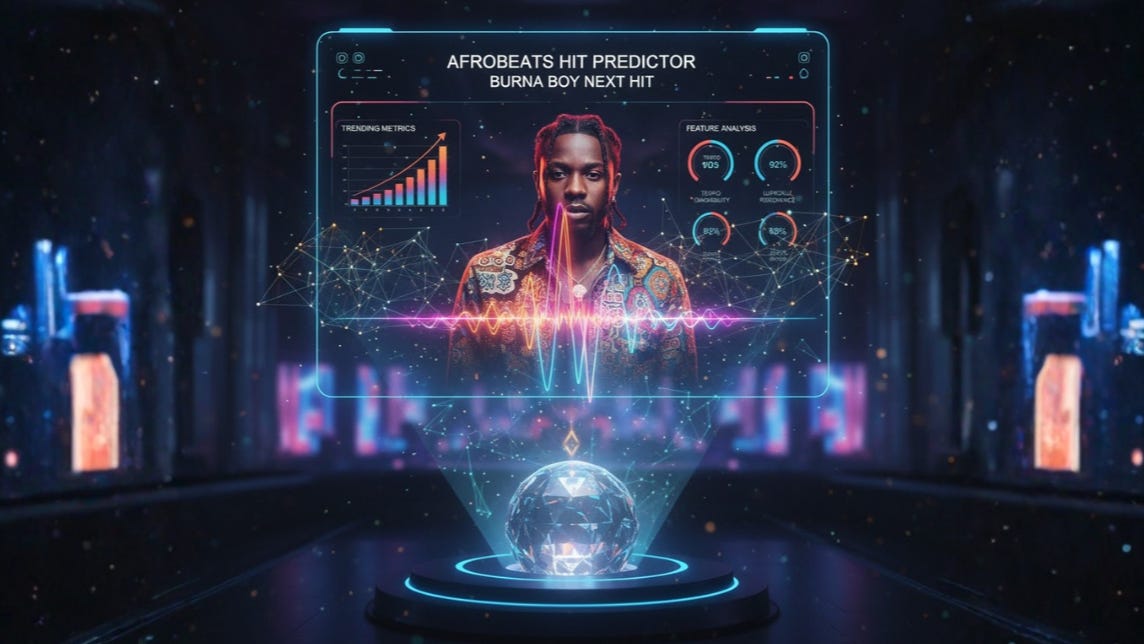
The Nigerian music industry is currently grappling with a technological earthquake that threatens to fundamentally alter its commercial DNA. The recent Build AI Summit held at the Lagos Oriental Hotel on 30 July 2026 served as a massive flashpoint for this industry in transition. The conversation has violently shifted from casual artistic experimentation to an urgent, high-stakes struggle for survival and ownership. Top-tier Afrobeats producers, artist union representatives, and copyright lawyers convened to address a deeply complex three-headed monster: unauthorised vocal cloning, AI-driven production workflows, and a severely inadequate legal framework. The central consensus among attendees was entirely clear. The technology is moving at lightspeed, and Nigerian regulatory institutions are dangerously lagging behind.
For many creators, artificial intelligence is an unprecedented and highly lucrative equaliser. The technology has deeply permeated the production pipelines of major labels, where stem separation, AI-driven sound design, and automated mastering chains are now standard workflow. Emerging producers in Port Harcourt and Lagos can now generate world-class sound without relying on astronomical studio budgets. Producer Eclipse Nkasi previously proved this concept by generating an entire, highly polished Afrobeats album in three days for a mere $500. However, artists like Adetola Akinjoko (TB2) warn that this hyper-efficiency comes at a massive cultural cost. Afrobeats relies heavily on lived experience, cultural nuance, and authentic rhythm. Outsourcing this creative heavy lifting to a machine learning algorithm risks stripping the genre of its fundamental soul.
The most visible and destructive element of this technological shift is the rampant weaponisation of vocal cloning. The Nigerian digital ecosystem is currently flooded with unauthorised synthetic performances. Voice-cloned deepfakes of megastars like Wizkid, Burna Boy, and Asake regularly rack up millions of streams on platforms like TikTok and Instagram. Even veteran artists like eLDee tha Don and Mr P have recently faced intense online scrutiny and unverified accusations of utilising AI to synthesise their vocals in comeback projects. Artists are rapidly losing control over their most valuable commercial asset: their distinct vocal identity. When anyone with a laptop can generate a convincing new Davido track without his consent, the foundational economics of exclusivity and artist branding completely collapse.
The institutional response to this existential crisis has been practically non-existent. Nigeria’s primary legal framework, the Copyright Act 2022, was drafted just before the generative AI explosion. It strictly ties copyright protection to human authorship and entirely fails to classify synthetic voice replication as a direct intellectual property violation. Legal experts at the summit pointed out a terrifying reality: there is currently no explicit statutory language preventing AI companies from scraping Nigerian sound recordings to train their commercial data models. The Nigerian Copyright Commission (NCC) has acknowledged the threat but has yet to produce comprehensive, enforceable guidelines. Consequently, the world’s second-largest Black music export economy is currently defending its multi-billion-dollar catalogue almost entirely through angry artist tweets and ad-hoc social media callouts.
The creators advocating in Lagos are not demanding a complete ban on artificial intelligence. They understand that trying to outlaw technological progress is a futile exercise. Instead, they are aggressively pushing for modernised, robust regulatory frameworks. The industry wants the immediate implementation of a mandatory opt-in licensing system, ensuring artists are actively compensated when their catalogues are used as AI training data. Furthermore, they are demanding that vocal identity and personal likeness be explicitly recognised as protected, monetizable property rights under Nigerian law. The Afrobeats ecosystem is demanding a permanent seat at the table to ensure that the very people who built the global culture actually share in its automated future.
Winners: Agile independent producers leveraging AI to slash studio overheads, tech developers building generative tools, and digital platforms capitalising on the viral engagement of synthetic music.
Losers: Legacy artists fighting a losing battle against digital impersonation, traditional session musicians losing paid work to algorithms, and copyright owners struggling to monetise uncredited training data.
Bottom Line: If Nigerian lawmakers fail to rapidly update their intellectual property frameworks, the creators who built the global Afrobeats phenomenon will watch algorithms freely harvest their cultural labour for absolute zero compensation.