


Nigeria’s Minister of Power, Joseph Tegbe, says the Federal Government will do whatever it takes to improve electricity access, as households and businesses continue to struggle with unreliable power supply.
Tegbe gave the assurance during an interview with Arise Television on Monday, November 23, 2026. He acknowledged the difficulties Nigerians face and said his ministry was working with relevant stakeholders to address the problems.
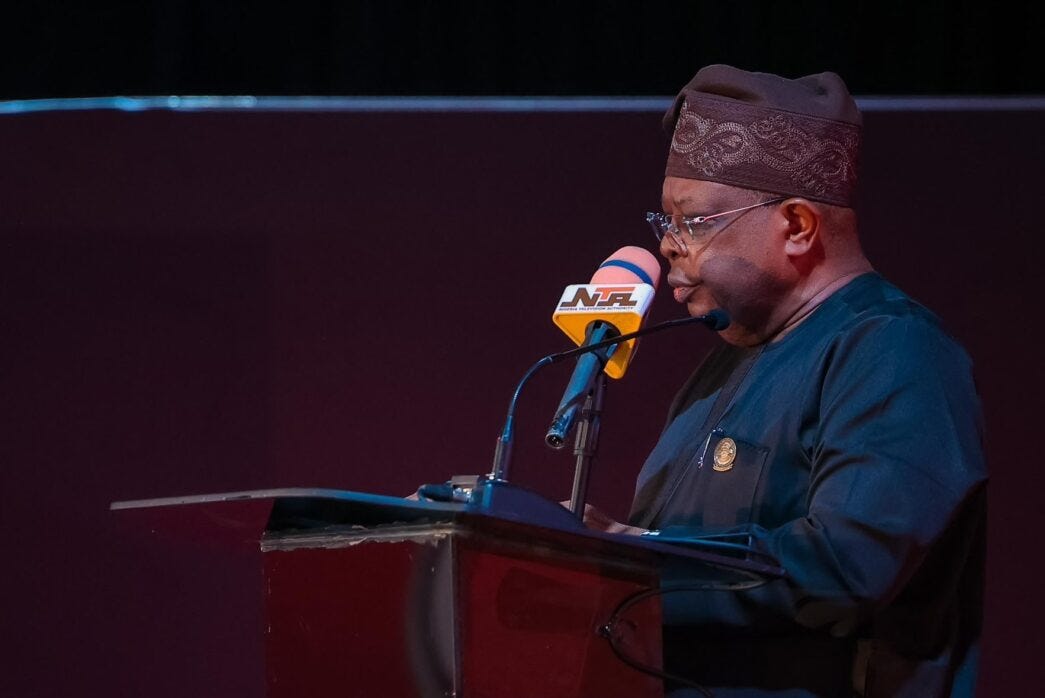
“We understand the pain of Nigerians. We will do whatever it takes to give Nigerians access to electricity,” he said.
However, the minister’s assurance comes against the background of decades of underinvestment, ageing infrastructure and repeated government promises to fix the power sector.
Tegbe has previously admitted that the infrastructure deficiencies are more extensive than initially anticipated. He said Nigerians should expect significant improvements within three to five years, rather than an immediate turnaround.
According to him, the biggest challenge is not necessarily electricity generation but the poor condition of infrastructure across the sector. He also criticised previous investment decisions, arguing that governments had spent money on projects without adequately considering how different facilities connect to the national grid.
The minister said his team was reviewing existing projects to identify those that would deliver the greatest improvements to electricity supply.
The government is also dealing with outstanding debts owed to power generation companies. Tegbe disclosed that the Federal Government had negotiated the legacy debt down from ₦6 trillion to ₦3.3 trillion, with ₦1.23 trillion already paid.
He said the government was working towards settling the outstanding balance through different arrangements.
Other problems include inadequate gas supply to thermal power stations, transmission limitations, vandalism and distribution inefficiencies. These challenges have repeatedly reduced the amount of electricity available to consumers.
Earlier in November, Tegbe directed the Transmission Company of Nigeria, the Nigerian Independent System Operator and electricity distribution companies to address operational constraints responsible for declining power generation.
The ministry attributed recent disruptions partly to gas shortages, maintenance activities and reduced output from hydroelectric stations.
The potential beneficiaries of a successful reform are millions of households, manufacturers, small businesses and investors who depend on reliable electricity. But consumers will remain the losers if government interventions fail to produce consistent improvements in supply.
Tegbe’s challenge is to turn his assurances into measurable results. Nigerians need to see more electricity reaching the grid, fewer system failures and longer hours of supply. They also need transparent explanations when disruptions occur.
Bottom Line: Tegbe says the government will do whatever it takes to improve electricity access. But Nigerians have heard similar assurances from successive administrations. The credibility of this promise will depend on whether the power sector finally delivers reliable electricity to homes and businesses.