


Nigeria’s capital market has moved to a T+1 settlement cycle, a major modernisation aimed at reducing counterparty risk and improving efficiency. The system, introduced on June 1, requires trades to be settled within one day instead of the previous two. But international investors are finding it difficult to complete trade confirmations, reconcile transactions and secure foreign exchange within the shorter timeframe.
The challenges have had real consequences. FTSE Russell delayed its decision on restoring Nigeria to its Frontier Market index until August 2026. The delay is a blow to Nigeria’s efforts to attract foreign portfolio investment. Without the index restoration, some investors will remain on the sidelines.
The Securities and Exchange Commission has acknowledged the problem. The new framework requires stronger technology, better liquidity management and improved access to foreign exchange. These are not small fixes. Technology upgrades take time. Forex liquidity remains a perennial challenge. And investors, particularly foreign ones, are not known for their patience.
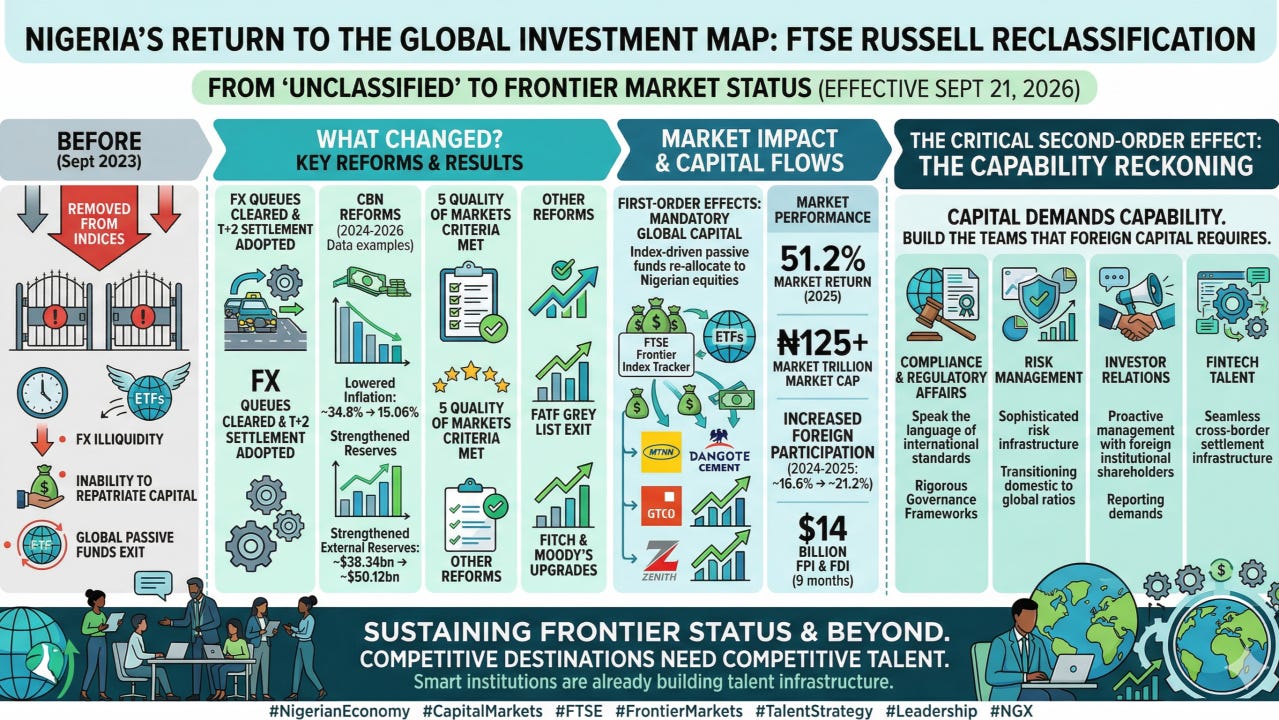
The FTSE delay echoes the 2020 index review, when Nigeria was downgraded from Frontier to Unclassified due to forex restrictions. That downgrade cost the country billions in potential investment. The current delays suggest that Nigeria’s structural problems with currency convertibility and settlement efficiency have not been fully resolved.
Despite the setbacks, market experts say Nigeria remains an attractive investment destination. Recent reforms have improved market accessibility and strengthened investor confidence. But operational adjustments are still needed. The T+1 shift is a step forward, but it is a step on a road that remains unpaved.
For a foreign investor, the T+1 settlement cycle means faster trades. For the Nigerian capital market, it means more complexity. And for the naira, it means another source of pressure as investors demand faster access to foreign exchange.
The winners: the Nigerian capital market, which is modernising. The losers: foreign investors who face operational headaches, and Nigeria’s index status, which faces another delay.
Bottom Line: T+1 is a good reform. It is also a reminder that reforms are only as good as the systems that support them.