


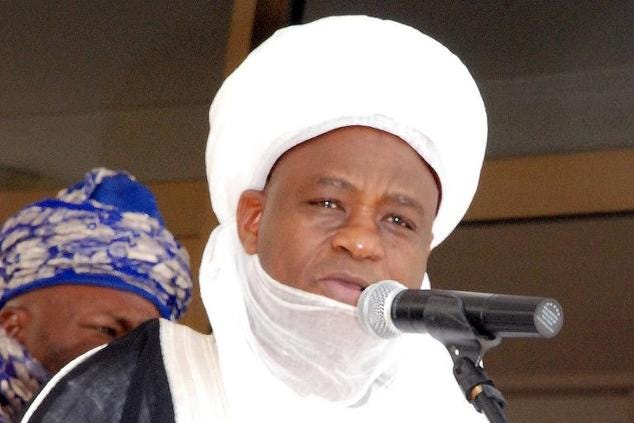
The Sultan of Sokoto, Muhammad Sa’ad Abubakar III, has called on Muslim and Christian leaders to share meals. He spoke at a Nigeria Inter-Religious Council (NIREC) stakeholders’ meeting in Abuja. He said leaders can sit together, drink fura, eat amala and tuwo. The aim is to promote interfaith harmony and national unity. He emphasised cultural and social bonding beyond religious tolerance.
NIREC was established in 1999. It brings together the Nigeria Supreme Council for Islamic Affairs and the Christian Association of Nigeria. The council has mediated disputes and promoted dialogue for over two decades. Previous efforts have included joint prayers, peace conferences and community outreach. The Sultan’s call is not new. It echoes past gestures. What differs is the emphasis on food as a unifier. Fura, amala and tuwo are staples across Nigeria’s regions and religions. They are not claimed by one faith. They are shared.
The Sultan’s statement is symbolic. He wants leaders to model coexistence. If imams and pastors eat together, their followers may follow. The message is simple. Tolerance is not enough. Bonding matters. The setting matters too. NIREC is a formal body. Its stakeholders include senior religious figures. Their actions carry weight. The Sultan is one of Nigeria’s most influential Muslim leaders. His words reach millions. When he calls for shared meals, he signals that interfaith harmony is a priority. He also challenges those who use religion to divide. The gesture is welcome. It is also limited. A meal does not resolve land disputes, political marginalisation or economic inequality. Those are the drivers of many conflicts. Food can open a door. It cannot walk through it.
Winners: NIREC, which gains visibility. The Sultan, who reinforces his reputation as a moderate voice. Advocates of unity, who gain a platform. Nigerians who want peace, who see a positive gesture. Losers: Extremists who profit from division. Politicians who exploit religious tension. Critics who see dialogue as weakness. The poor, if symbolic gestures replace structural solutions.
Bottom Line: Sharing fura and amala is a start. It is not a solution. Nigeria’s religious harmony needs more than meals. It needs justice, jobs and equal opportunity. The Sultan knows this. His gesture is a reminder. The work remains.