


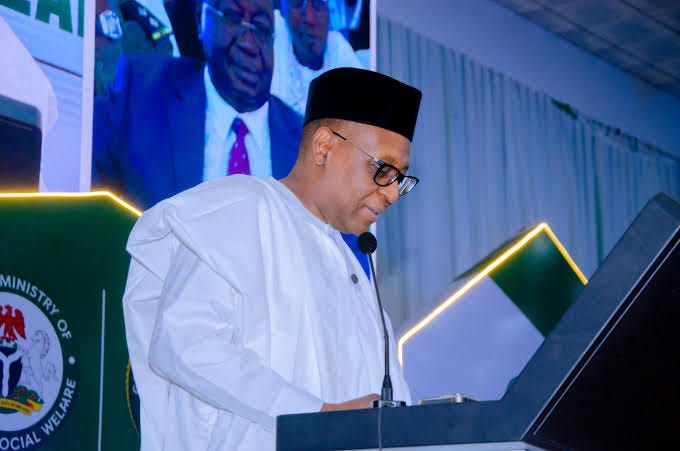
The Coordinating Minister of Health and Social Welfare, Muhammad Pate, said state governments have increased their combined health budgets from ₦1.97 trillion in 2023 to more than ₦3.3 trillion in 2026, a rise of about 67%. He spoke at the opening of the 67th Regular Session of the National Council on Health in Lafia, Nasarawa State. He said 41 commitments under the Nigeria Health Sector Renewal Investment Initiative had been achieved and 12 of 13 health indicators had improved. Skilled deliveries in Basic Health Care Provision Fund facilities rose from 4.8 million in 2023 to nearly eight million by mid-2026. Health insurance coverage expanded from 16 million to nearly 24 million people. Nearly 20,000 skilled birth attendants were recruited across 22 states.
The mechanics complicate the headline. Pate also said only 412 of 740 expected reports on the 20 resolutions adopted at the previous council were submitted. That is 56%. No state reported on all 20 resolutions. Households still carry the largest share of health expenditure. Government allocations remain below the 15% benchmark set by the Abuja Declaration in 2001. Skilled health workers attended fewer than four in 10 rural births, against nearly seven in 10 urban births. A larger budget that is not released, not spent or not reported is a number, not a service.
This echoes the 2014 National Health Act, which created the Basic Health Care Provision Fund and promised a floor for primary care. It also mirrors the longer pattern of Nigerian health financing where federal and state budgets rise while out-of-pocket spending rises faster.
The winners are the state governments that can report a 67% increase, and the manufacturers who received more than ₦24 billion in tax waivers under a presidential executive order. The losers are the rural women who still give birth without a skilled attendant, and the households that pay the largest share of the bill.
Bottom Line: A 67% budget increase is a start. A 15% allocation and a 100% reporting rate would be a policy.