


The National Assembly has passed the constitutional amendment for state policing. The debate is no longer about whether Nigeria should have state police. It is about which states can actually afford them.
The fiscal reality is uneven. BudgIT’s 2025 State of States Report shows wide disparities in internally generated revenue. Enugu, Bayelsa, Abia, Osun and Kano are growing their revenue bases. Yobe and Kebbi recorded negative scores, indicating weak growth and continued dependence on federal allocations.
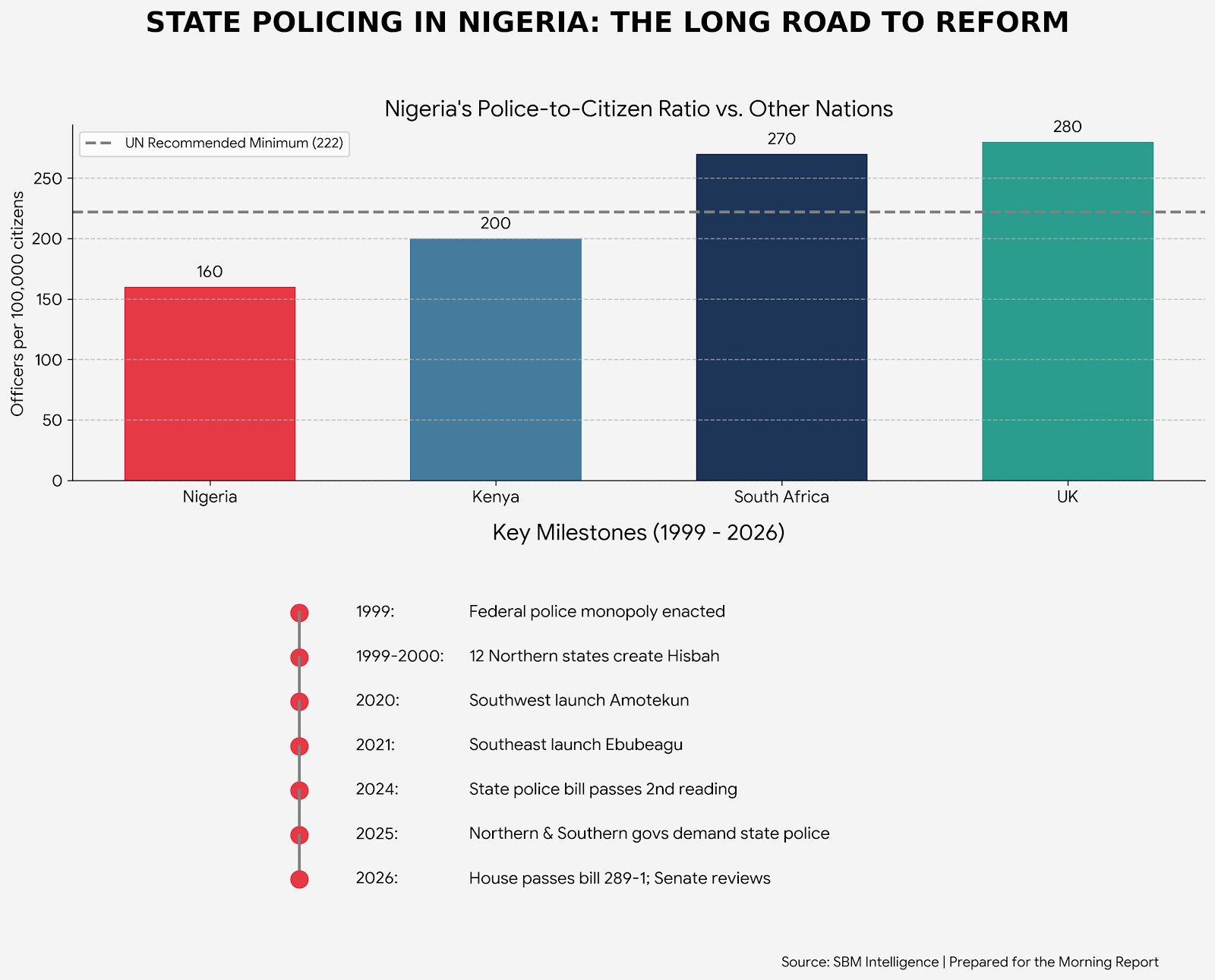
Policing is expensive. It requires recruitment, training, infrastructure, vehicles, weapons, technology and ongoing salaries. Unlike one-off capital projects, policing is driven largely by recurrent expenditure. Officers must be paid every month regardless of fluctuations in government revenue. States already struggling to meet salary obligations may find it difficult to absorb these additional responsibilities.
Debt burdens add another layer. BudgIT’s Index C, which assesses fiscal sustainability, ranks Akwa Ibom, Delta, Bayelsa, Zamfara and Yobe highest on debt capacity. At the other end are Kaduna, Edo, Cross River, Lagos and Bauchi, whose lower rankings suggest greater caution is needed in taking on additional financial obligations.
This mirrors the 2014 oil price crash era, when states that had built fiscal buffers weathered the storm while others collapsed under the weight of salary arrears. The pattern is repeating. States with strong revenue bases will build functioning police forces. States without them will not.
The winners: states with strong internally generated revenue and manageable debt profiles. The losers: states that rely heavily on federal allocations, whose citizens may continue to face insecurity while wealthier states gain protection.
Bottom Line: The constitution now allows state police. The budget does not. For most states, that is a problem.