


Federal spokespersons formally dismissed statements by opposition figures regarding President Bola Tinubu’s Chicago State University enrollment history, while reiterating that national public debt metrics were being miscalculated in viral opposition posts. The two rebuttals landed in the same news cycle, which is instructive. One is a fight about a 1979 transcript. The other is a fight about whether Nigerians are being told the truth about the money they owe. Only one of those fights matters to a family buying diesel in November 2026.
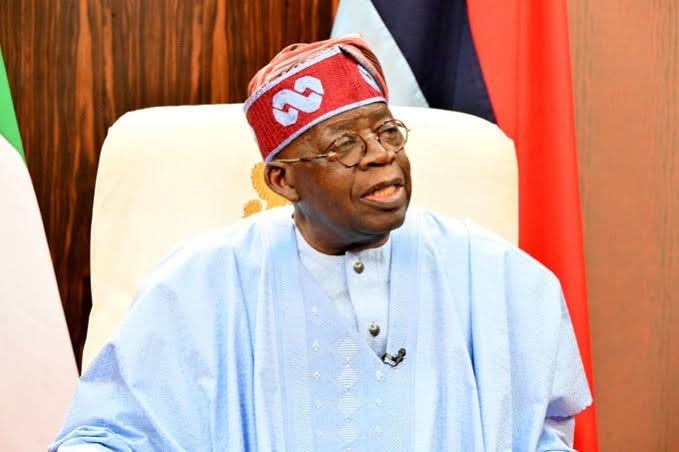
Start with Chicago. A former lecturer, Adetokunbo Pearse, claimed on television that Tinubu never attended the university, and that he would know because he directed the programme Tinubu supposedly attended. The presidential aide, Dada Olusegun, responded with a tidy demolition. Pearse taught at Chicago State from 1985 to 1990. Tinubu graduated in 1979. The lecturer arrived six years after the student left, and his PhD is in Linguistics, not Accounting . The university itself confirmed Tinubu’s attendance and graduation in 2023, a position its registrar restated under oath . Pearse’s claim is not a revelation. It is a rerun.
But the government’s handling of the rerun reveals a reflex. Instead of pointing to the university’s confirmation and moving on, spokesmen spent precious airtime litigating a settled record while the debt question festered. The opposition understands this dynamic. Every cycle, it throws the certificate into the room and watches the government chase it. The chase is the point. It keeps the conversation on Tinubu’s biography and off the balance sheet.
The debt rebuttal is where the government has a stronger case, and where it squandered it. Opposition graphics claimed Tinubu borrowed ₦120 trillion in three years, compared with ₦46 trillion borrowed by sixteen previous leaders over sixty three years. Olusegun correctly noted that the ₦46 trillion figure, calculated in late 2022, excluded ₦22.7 trillion in Central Bank Ways and Means advances that only entered the books in May 2023 . He also pointed out that the old calculations used an exchange rate of ₦448 to the dollar when the street rate was above ₦700, and that unification in June 2023 made the same dollar debt look ₦13.4 trillion larger overnight .
In dollar terms, the numbers are less dramatic than the opposition suggests. Nigeria’s public debt moved from $113.4 billion in June 2023 to $120.9 billion by June 2026, an increase of roughly $7.5 billion . The Debt Management Office confirms the total stock stood at ₦166.79 trillion, or $120.93 billion, as of June 2026 . That is a real increase, but it is not the fictional ₦120 trillion bonfire the graphics describe.
Here is the trade off the government keeps avoiding. The naira debt stock nearly doubled from ₦87.38 trillion in June 2023 to ₦166.79 trillion in June 2026 . Some of that is exchange rate arithmetic. Some is new borrowing. The government’s rebuttal explains the arithmetic but does not account for the new borrowing, because doing so would require a conversation about what the money bought. Per capita, every Nigerian now carries roughly ₦702,185 in public debt, about ten months of the ₦70,000 minimum wage . That is the number that should anchor the argument, not Pearse’s television appearance.
The historical parallel is the 2016 recession, when the government of the day blamed external forces and refused to explain the currency and debt mechanics to citizens. The information vacuum filled with rumour, and the rumour became the opposition’s most effective weapon. The current spokesmen have better data than their predecessors. They are using it to win arguments instead of building understanding.
Winners: Opposition figures, who benefit from a government that fights old fights on their terms. Presidential aides, who get to look sharp on television. Nobody else.
Losers: Nigerians trying to understand the country’s debt position, who get combat instead of clarity. The government’s credibility, which erodes each time it treats a settled transcript as a live threat while the borrowing numbers remain unexplained in plain language.
Bottom Line: A government that spends its energy debunking a 1979 transcript has already lost the argument about 2026 debt.