


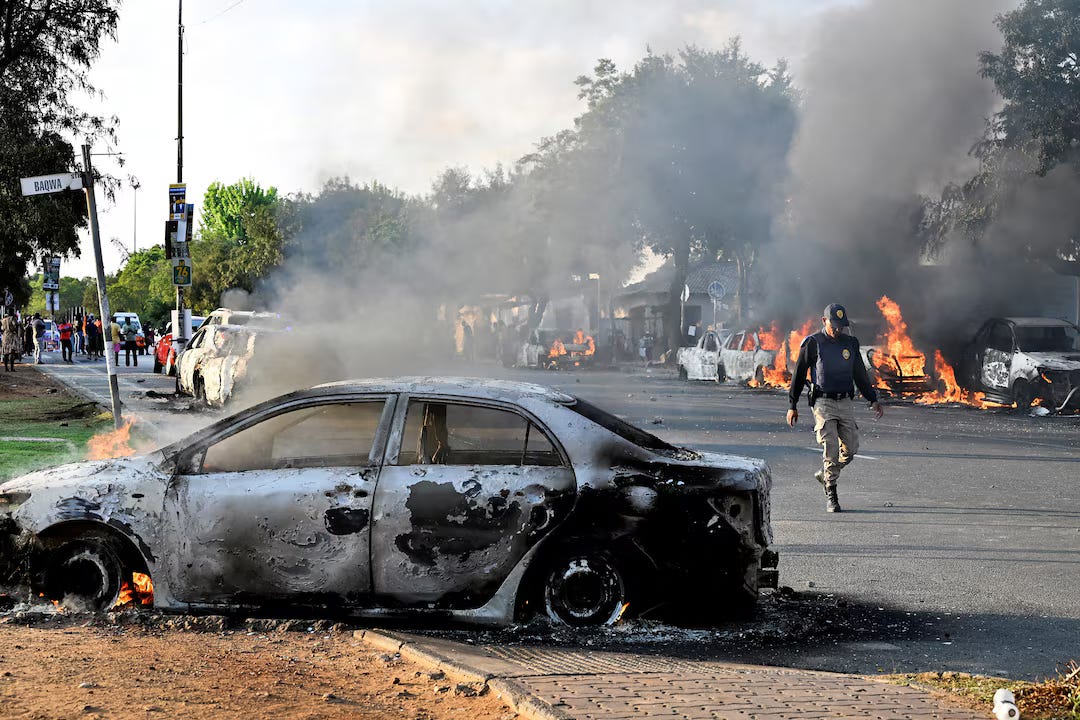
South Africa’s Department of Home Affairs has withdrawn a directive that allowed asylum applications to proceed. The withdrawal came on Friday. It followed anti-migrant protests that turned violent in Johannesburg and Durban. Protesters torched vehicles and looted foreign-owned shops. The government blamed disinformation for the unrest.
South Africa has experienced recurring waves of anti-immigrant violence. In 2008, xenophobic attacks killed over 60 people. In 2015 and 2019, similar riots targeted foreign nationals. In 2024, tensions rose again ahead of elections. Migrants from Zimbabwe, Mozambique, Malawi and Nigeria are frequently blamed for unemployment, crime and pressure on services. Social scientists say the allegations are unsupported by evidence. South Africa hosts millions of migrants. Many are undocumented. The country’s asylum system is under-resourced. Applications backlog for years.
The directive was meant to implement a Constitutional Court ruling on 7 July. The court said asylum seekers could not be denied access to the asylum system solely on procedural grounds, including entering the country illegally. Home Affairs issued the directive as an operational measure. It said the directive overwhelmed refugee reception offices within days. Officials faced risk. Public safety and order were threatened. The department withdrew it.
The government stressed that the ruling did not automatically grant refugee status, permanent residence or other legal rights. It said disinformation fuelled the protests. A senior police official, Lieutenant-General Puleng Dimpane, said calm had returned to Soweto. In Durban, police spokesperson Robert Netshiunda said the situation had stabilised. A swift police response prevented further damage. Rioters had set fire to 14 vehicles in Durban and 10 in Soweto. Foreign-owned shops were looted. Thousands of foreign nationals have left the country in recent years.
Winners: The protesters, if the withdrawal satisfies them. Home Affairs, which reduces pressure on offices. Police, who restored calm. Losers: Asylum seekers, who lose access. Migrants, who face continued hostility. The Constitutional Court, whose ruling is undermined. South Africa’s reputation, which suffers. Foreign nationals who flee.
Bottom Line: A court ruling met a mob. The department withdrew. Asylum seekers pay the price. The violence worked. That is the precedent. Until South Africa confronts the economic anxieties driving xenophobia, the next riot is a matter of time.