


South African police are investigating two shootings that left at least 17 people dead on 15 November 2026. Nine victims, including three women, were found shot inside a shack in Jeffsville, an informal settlement in Atteridgeville township, west of Pretoria. Police said the motive remained unknown. No arrests have been made.
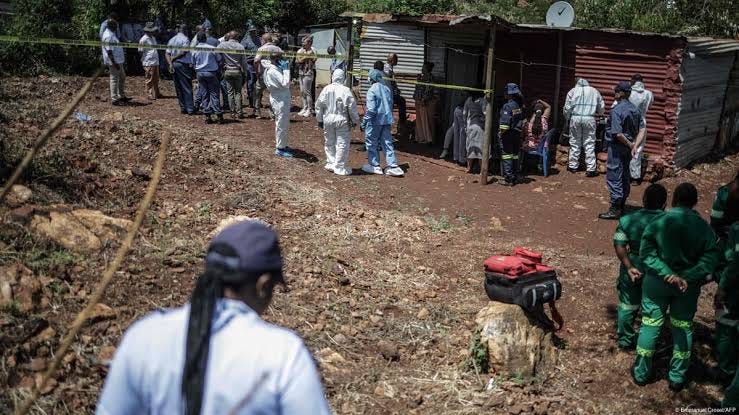
In a separate incident, eight people were found allegedly shot dead inside a vehicle near Pietermaritzburg in KwaZulu-Natal province on Sunday night. Authorities have launched investigations into both incidents. They have not established a connection between them. The killings highlight South Africa’s persistent violent crime problem. The country records an average of approximately 60 murders daily.
The mechanics matter. An average of 60 murders a day is one every 24 minutes. In a shack in Atteridgeville, nine people were killed in a single room. In a vehicle near Pietermaritzburg, eight were killed in one place. These are not random street crimes. They are group killings, often linked to criminal economies, informal settlement disputes or extortion. Police have no motive and no suspects in either case. That gap between the crime and the response is the story.
This mirrors the 2021 July unrest in KwaZulu-Natal and Gauteng, when looting and violence overwhelmed police. It also echoes the recurring mass shootings in Cape Town’s informal settlements, where gang violence produces multiple casualties in single incidents. The difference now is that the killings happened outside the usual gang hotspots. Atteridgeville and Pietermaritzburg are not Cape Flats. The violence is spreading.
From a Nigerian vantage point, the comparison is uncomfortable. Nigeria records its own mass killings, often in the north, often with fewer arrests. South Africa’s 60 daily murders are documented and counted. Nigeria’s are often disputed or unrecorded. Both countries have violent crime problems. Only one counts them properly.
The winners are police investigators, if they make arrests; and the government, if it can show it is responding. The losers are the 17 dead, their families, and communities in Atteridgeville and Pietermaritzburg who now live with the knowledge that a group killing can happen without a motive or a suspect.
Bottom Line: Seventeen people killed in two incidents with no arrests and no known motive is a policing failure, not just a crime story. South Africa needs visible investigation and prosecution, not another statement of concern.