


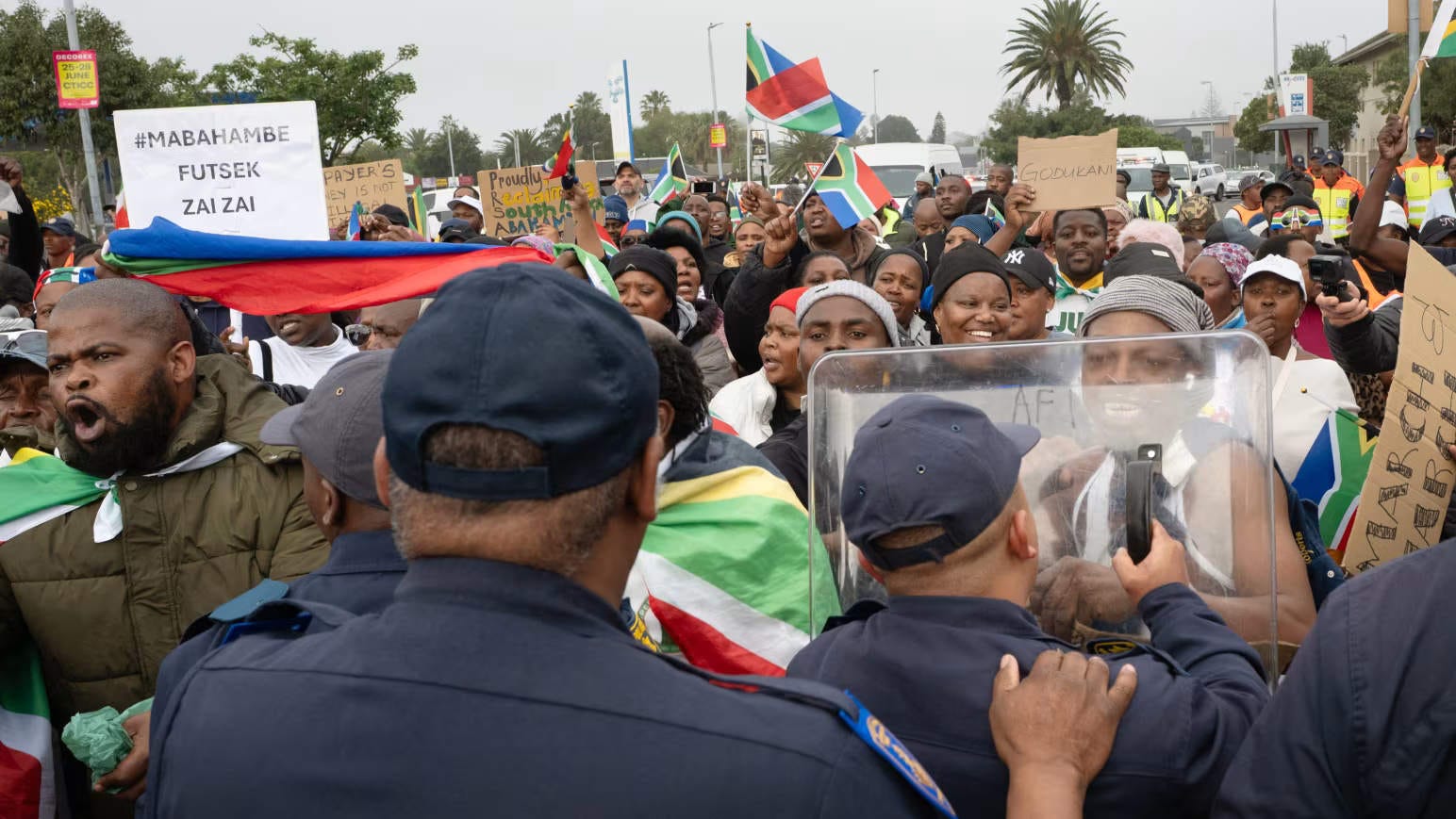
South African police arrested more than 900 people during nationwide anti-immigrant protests over undocumented migration. Police said 108 of the 120 marches passed without incident, while officers intervened in 12 protests that involved public violence, looting and immigration-related offences. Authorities said arrests were made for offences including robbery, harbouring undocumented migrants and public violence.
In Johannesburg’s Alexandra township, one person was killed after looters targeted foreign-owned spaza shops. Two others were injured in a separate shooting in the Hillbrow area, where soldiers were deployed alongside police. In Durban, police opened an investigation into the death of a foreign national who reportedly fell from a building, fearing he was being targeted. The protests followed months of rising anti-immigrant tensions and an unofficial deadline set by campaign groups for undocumented migrants to leave South Africa.
The Nigerian stake is urgent. The anti-immigrant violence in South Africa has repeatedly targeted Nigerians. The 2019 attacks on foreign-owned businesses led to a diplomatic crisis and prompted Nigeria to evacuate hundreds of citizens. The 2022 attacks in KwaZulu-Natal saw similar scenes. Now, with tensions rising again, the Nigerian government must decide whether to wait for the next crisis or act pre-emptively.
The protests are not an isolated event. They are part of a recurring pattern in South Africa, where economic frustrations, high unemployment and political rhetoric combine to target foreign nationals. The pattern is predictable: tensions build, protests erupt, businesses are looted, lives are lost, governments issue statements, and the cycle resets. The victims are almost always African migrants.
From a Nigerian vantage point, the issue is clear. Nigeria has a responsibility to protect its citizens abroad. The question is whether Nigeria will step up its diplomatic engagement with South Africa, issue travel advisories, offer evacuation assistance or push for an African Union response to the violence.
The winners: South African police, who made arrests. The losers: the foreign nationals who are targeted, the Nigerian citizens living in South Africa who face the same risks, and the African Union, which has failed to address the recurring violence.
Bottom Line: More than 900 arrests in South Africa. One dead. Many more at risk. Nigeria is not on the list of victims yet. But it is only a matter of time.