


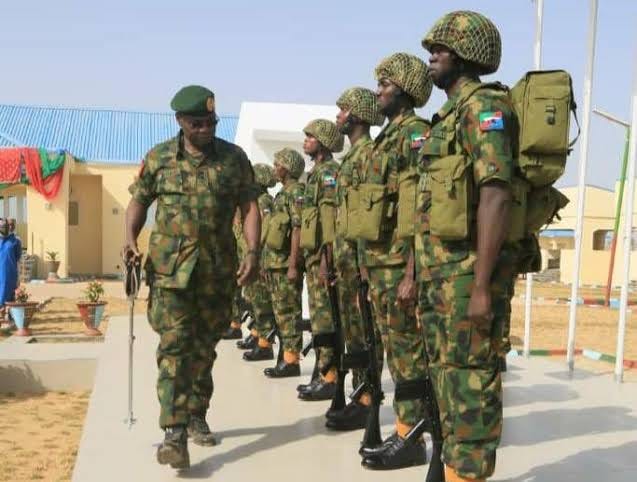
The Defence Headquarters confirmed on Thursday that Armed Forces personnel have begun receiving their September salaries, with the approved 80 per cent increase now reflected in their payments. A Private who previously earned about ₦103,000 now receives approximately ₦190,000, while a Lance Corporal moves from roughly ₦110,000 to about ₦202,000.
The increase, approved by President Bola Tinubu in August, takes effect from 1 September 2026. Personnel from Warrant Officer to Colonel receive a 50 per cent rise, while officers above the rank of Colonel receive 30 per cent. About 250,000 military personnel will benefit. The yearly salary bill for the Armed Forces rises from ₦660 billion to ₦924 billion.
This mirrors the long-standing fiscal logic of Nigerian security spending. The military receives priority in welfare adjustments because its loyalty is deemed essential to regime stability. Between 2015 and 2023, defence budgets consistently consumed the largest share of federal capital expenditure, even as equipment procurement scandals consumed billions without corresponding gains in operational capability.
The Joint National Public Service Negotiating Council has responded to the same economic pressures differently. It declared a three-day warning strike from 2 to 4 October 2026. The council’s members include the Nigerian Civil Service Union and other public sector unions. The strike follows the Federal Government’s alleged failure to address requests submitted to Tinubu in a letter dated 21 September 2026.
The contrast is stark. Soldiers receive a pay rise in the same week that civil servants withdraw their labour over the same cost-of-living crisis. The fiscal arithmetic is not complicated. The ₦264 billion annual increase for the military has no matching allocation for the civilian workforce.
The JNPSNC had demanded a nationwide wage award and the commencement of negotiations for a new national minimum wage. The current ₦70,000 minimum wage, approved in July 2024, was undermined by inflation before implementation. At ₦1,430 per litre of petrol, the entire monthly minimum wage buys just under 49 litres.
Winners and Losers
Winners: Military personnel from Private to Staff Sergeant, who gain the largest proportionate increase. The Defence Headquarters, which delivers on a welfare promise. The Presidency, which secures goodwill within the security establishment.
Losers: Civil servants, whose strike underscores their exclusion from the pay adjustment. State and local government workers, who are not covered by the federal salary review. The Federal Government, which faces simultaneous demands from the military and the civil service without the revenue to satisfy both.
Bottom Line: A soldier’s raise and a civil servant’s strike in the same week is not a coincidence. It is a priority ranking. The question is whether the priority is national security or political survival.