


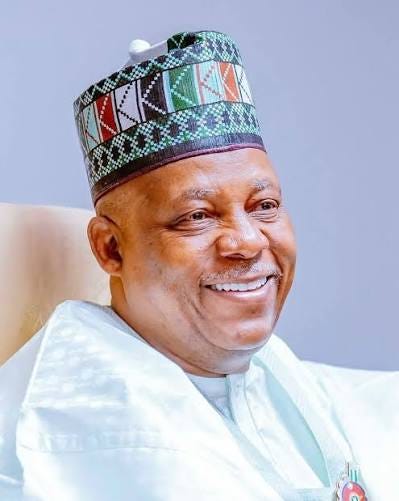
Vice-President Kashim Shettima commissioned the Ambassador Babagana Kingibe Innovation Hub in Maiduguri on Tuesday. The hub, built through a partnership between the Federal Ministry of Communications, Innovation and Digital Economy, IHS Nigeria and the Borno State Government, will host participants in the 3 Million Technical Talent programme and provide workspace for young people in the North-East. Shettima said the facility should be a “playground of ideas” and a springboard for young people beyond the major cities. Governor Babagana Zulum noted that several local government areas in Borno still lack adequate connectivity.
The mechanics of a digital hub in Maiduguri are a test of whether infrastructure follows the building. A hub needs power, bandwidth and a pipeline of trained instructors. IHS Nigeria, which builds telecom towers, is a partner, which suggests the connectivity problem is part of the plan. But a hub in a state where many LGAs have no reliable internet is a hub that depends on the same infrastructure gap it is meant to address.
This echoes the 2023 and 2024 launch of similar hubs in Kano, Enugu and Ibadan, each of which promised digital inclusion and then struggled with power and bandwidth costs. It also mirrors the longer pattern of Nigerian digital policy being strong on launches and weak on maintenance.
The winners are the 3MTT fellows in Borno who get a workspace, and IHS, which gets a partnership with the federal government. The losers are the young people in LGAs without connectivity, who will hear about the hub and cannot reach it.
Bottom Line: A hub is a building. Digital inclusion is a network, and the network is not there yet.