


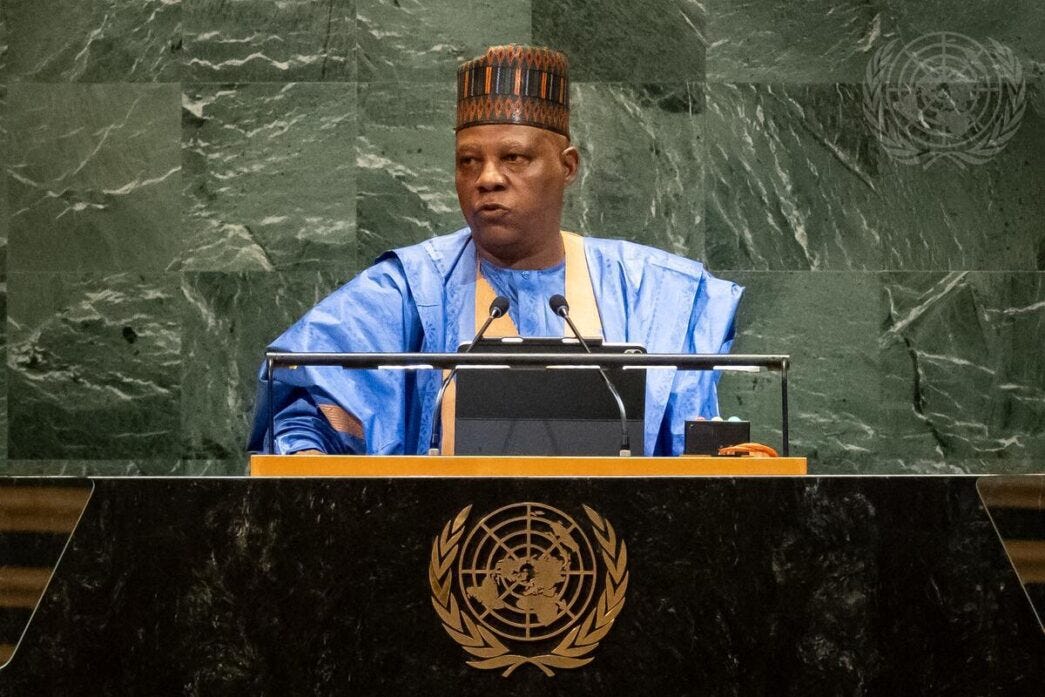
Vice President Kashim Shettima is leading Nigeria’s delegation to the 81st United Nations General Assembly in New York. He is joined by Foreign Affairs Minister Bianca Odumegwu-Ojukwu and several state governors. Ambassador Jimoh Ibrahim confirmed the composition. He assured citizens that Nigeria maintains full representation while President Bola Tinubu remains on leave in France.
Nigeria has been a UN member since 1960. It has served on the Security Council multiple times. It contributes troops to peacekeeping missions. Its UNGA participation has traditionally been led by the president. Vice presidents have led delegations when presidents were unavailable. In 2017, then Vice President Yemi Osinbajo led the delegation while President Muhammadu Buhari was ill. In 2020, the COVID-19 pandemic forced virtual participation. The current arrangement follows precedent.
The delegation includes governors, which is unusual. State governors rarely travel to UNGA as part of the federal delegation. Their presence suggests a focus on subnational diplomacy. States are increasingly seeking foreign investment directly. Governors want to pitch their states to investors, development partners and diaspora groups. That is a shift. It reflects the reality that states, not just the federal government, compete for capital.
The UNGA agenda includes climate finance, security cooperation and development goals. Nigeria’s priorities include debt relief advocacy, energy transition financing and security support. Shettima will deliver Nigeria’s national statement. He will hold bilateral meetings. The foreign minister will attend ministerial sessions. The governors will pursue their own engagements.
The absence of the president will be noted. Diplomats read attendance as a signal of priority. Nigeria’s opponents will use the absence to question its commitment. Nigeria’s allies will engage the delegation regardless. The substance of the meetings matters more than the optics.
The delegation’s size also invites scrutiny. Large delegations cost money. In a period of fiscal restraint, the expenditure will be questioned. The government will argue that representation requires presence. Critics will argue that presence requires results.
Winners: Shettima, who gains more international exposure. The governors, who get foreign platforms. The foreign minister, who leads substantive talks. Diplomats who get clear instructions from Abuja. Losers: Tinubu, whose absence is noted. Taxpayers, who fund a large delegation. Critics who see the trip as a junket. Nigeria’s diplomatic brand, if the absence is read as disinterest.
Bottom Line: Nigeria will be represented in New York. Shettima leads. Governors attend. The president stays in France. The world will notice both the delegation and the empty seat. Diplomacy is about presence. It is also about what presence delivers.