


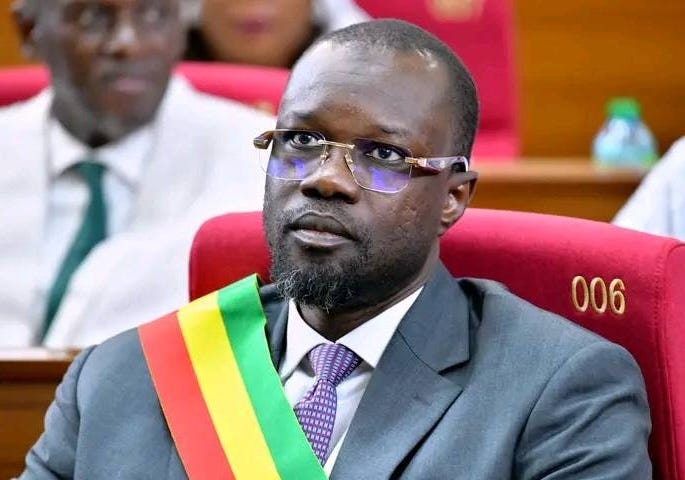
Senegal’s Constitutional Court has struck down a bill that sought to limit the president's powers and strengthen those of the National Assembly. Thursday’s ruling is the latest development in a dispute between President Bassirou Diomaye Faye and his former prime minister, Oussmane Sonko, whom Faye fired in May.
Faye referred the measure to the court, which found it to be “contrary to the Constitution.” The legislation would have barred the president from leading a party or coalition. It also granted investigative powers to the parliament. The government complained it had been carried out without consultation with political stakeholders, and Faye had planned to put it to a referendum.
Sonko now leads the National Assembly that passed the bill. He is also the leader of the Pastef party that proposed the measure and to which Faye also belongs. Faye said last week that he would soon create his own party. The dispute also unfolds ahead of the 2027 local elections, which are expected to provide the first major indication of the electoral strength of both camps.
The planned creation of a new presidential party could significantly reshape Senegal’s political landscape and redefine alliances within the country’s ruling establishment.
The Nigerian stake is clear. Senegal has long been considered one of West Africa’s most stable democracies. The power struggle between Faye and Sonko threatens that stability. If Senegal’s democratic institutions come under strain, the ripple effects could be felt across the region.
From a Nigerian vantage point, the court’s ruling is a reminder of the importance of independent judiciaries. In Nigeria, the courts have also played a critical role in resolving political disputes, from the 2023 presidential election to various governorship tussles. The Senegalese court’s decision to strike down the bill reinforces the principle that constitutional limits on executive power must be respected.
This mirrors the 2019 dispute between President Muhammadu Buhari and the National Assembly over the budget process. The mechanism then was different, but the result was the same: a power struggle between the executive and the legislature that tested the resilience of democratic institutions.
The winners: Senegal’s Constitutional Court, which asserted its independence; President Faye, who successfully challenged the bill; and Senegal’s democratic institutions, which demonstrated their resilience. The losers: Oussmane Sonko, who lost a major political battle, and Senegal’s ruling party, which faces deepening internal divisions.
Bottom Line: Senegal’s court has struck down a bill that would have limited presidential powers. The fight between Faye and Sonko is not over. The stability of one of West Africa’s most stable democracies is at stake.