


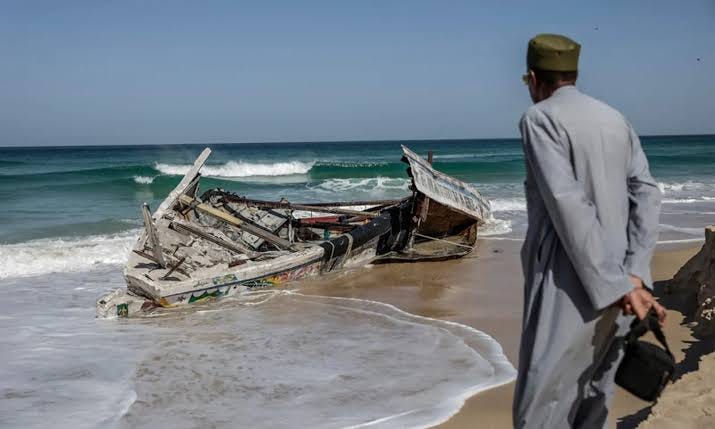
The death toll from a migrant boat that sank off Lompoul, in Senegal’s Louga Region, rose to 39 on 9 November. One survivor was found. The regional governor, Ndeye Nguenar Mbodj, reported four more bodies. Rescuers have searched about 25 kilometres of coastline over three days. Sea currents carried bodies southward and slowed the search.
Of the 39 recovered, 24 have been identified and returned to families. Eleven await identification. Four bodies in advanced decomposition were buried. Local media said the wooden boat carried people attempting irregular migration. The number aboard is unknown, and so is the cause of the sinking. Accounts of the timing differ. An aid group, Boza Fii, said the vessel went down on Friday 6 November. Media reports said Saturday.
President Bassirou Diomaye Faye said all state authorities and resources had been mobilised, and pledged to pursue those organising the crossings. The interior minister, Mouhamadou Makhtar Cisse, visited the area on 9 November and called for closer cooperation with neighbouring countries. An interior ministry source said the toll would rise. It probably will.
The route is the Atlantic passage from Senegal and Mauritania towards the Canary Islands. It is not the Mediterranean, and it rarely makes Nigerian headlines. That is the first reason a Lagos reader should pay attention. The second is that the same incentives operate here. A young man in Sokoto weighing a journey through the desert to Libya is making the same calculation as a young man in Louga weighing a pirogue. The difference is the water.
The historical echo is the 2020 sinking off Mauritania and the 2006 wave of pirogue departures from Senegal’s coast, when Europe tightened the Mediterranean route and the smugglers simply moved west. Each crackdown shifted the route rather than closing it. The current is the same current that carried those boats.
There is a Nigerian interest in the diplomacy too. Senegal and Nigeria are both Economic Community of West African States members. Cisse’s call for regional cooperation is an invitation that Abuja has not answered in public. A joint coastguard and intelligence arrangement would cost a fraction of a European border contract, and it would be negotiated by Africans.
The winners are the smugglers, who will sell the next crossing on the promise that this boat is different. The losers are the 39 dead, the 11 families still waiting for a name, and the coastal communities that recover the bodies.
Winners: Smuggling networks, who face no immediate disruption. European border agencies, which will cite the toll to justify more funding. Losers: The 39 dead and their families. The 11 unidentified. Senegalese coastal communities doing the recovery.
Bottom Line: Every crackdown moves the route, not the trade. Until the crossing is policed jointly by the states it passes through, the toll will keep rising.