


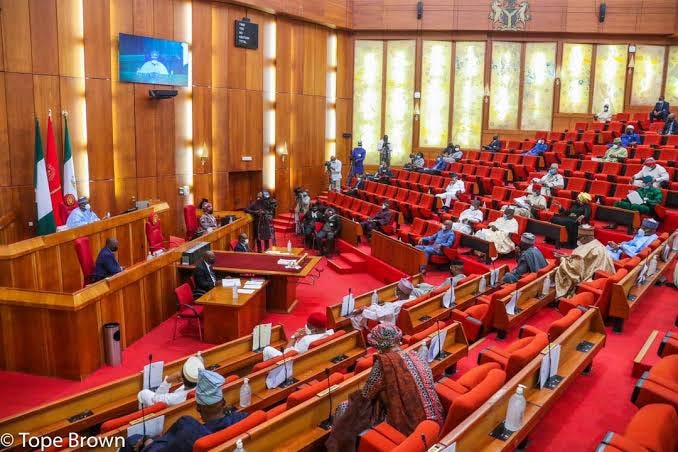
The Senate has referred President Bola Tinubu’s request for a $7.7 billion external loan to its Committee on Local and Foreign Debts. The loan is worth about ₦10.79 trillion at current rates. It forms part of the ₦29.2 trillion borrowing provision in the 2026 budget, which comprises ₦18.4 trillion in domestic financing and ₦10.79 trillion in external loans. The money would fund a projected ₦31.4 trillion deficit.
A referral is the least the Senate could have done. It is also the most it has done so far. The request now sits with a committee that will examine the terms, the projects and the repayment schedule. Until it reports, the borrowing plan is neither approved nor rejected. It is pending.
This mirrors the borrowing pattern that has defined the Tinubu administration since 2023. Public debt reached ₦166.79 trillion by June 2026, a 90.9 per cent increase in three years. External debt climbed from $42.49 billion in December 2023 to $54.52 billion by June 2026. Debt service reached ₦4.63 trillion in the first quarter of 2026 and exceeded revenue in that period. The government borrowed to pay what it already owed.
Tinubu says the government will prioritise Eurobond issuance and will also consider multilateral, bilateral and commercial financing. The funds would support defence, transportation, agriculture, power, education and healthcare. He argues that foreign currency proceeds would strengthen external reserves and support the naira.
The logic is contested on its own terms. Dollar borrowing adds to external obligations. Inflows support reserves. But repayment is in dollars, so every loan adds to future outflows. If the borrowed money builds a road that lowers transport costs, the road pays for itself through growth. If it funds recurrent spending, the loan only defers the bill. The committee’s job is to determine which of those two is being proposed.
Senate President Godswill Akpabio urged favourable borrowing terms. He also acknowledged concerns over rising debt-servicing obligations. That acknowledgment is the honest part of the process. The Senate knows the arithmetic. It has seen revenue consumed by debt service. It has watched the naira absorb the pressure of external obligations. It still has to decide.
The timing is the complicating factor. The 2027 election is approaching. The budget deficit is large. The government needs financing. The Senate must balance oversight with urgency. Too much scrutiny delays the money. Too little scrutiny converts oversight into a rubber stamp.
Winners and Losers
Winners: The Federal Government, which gains a legislative pathway to financing. Infrastructure contractors, who will bid for the projects the loan funds. The Committee on Local and Foreign Debts, which gains a platform to demonstrate oversight.
Losers: Future taxpayers, who inherit the repayment obligation. Private borrowers, who face crowding out as the government absorbs available credit. The naira, which faces pressure from external debt service. Nigerians who see debt service consume revenue that could fund health and education.
Bottom Line: A referral is not an approval. The committee will examine the terms and the projects. The test is whether the loan buys growth or merely defers obligation.