


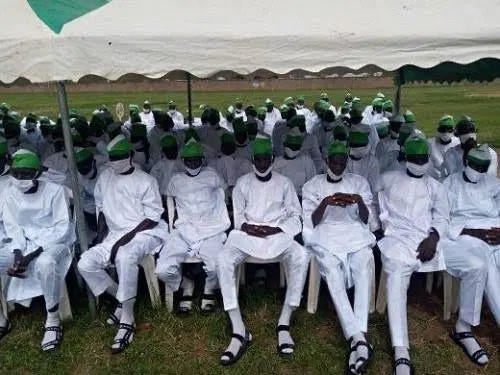
The Senate on Tuesday approved a prayer seeking to end state pardons and the rehabilitation of criminals, particularly suspected Boko Haram members and other insurgents. The prayer came in support of a motion moved by Senator Abdulazeez Yar’Adua regarding the abduction and killing of the former Director of Defence Information, Retired Major General Rabe Abubakar, and other military officers.
The plenary, presided over by Deputy Senate President Jibrin Barau, condemned the rehabilitation of Boko Haram insurgents, bandits, kidnappers and other criminals under the deradicalisation and rehabilitation programmes of some state governments. Some lawmakers linked the unending insurgency crisis in the country, particularly in northern Nigeria, to the constant release of “repentant” criminals back into society.
The Senate expressed deep concern over the worsening security situation, warning that the recent abduction and killing of retired military officers signal a dangerous shift in Nigeria’s security challenges. Adopting a resolution on the matter, the Senate described the late general’s death as more than a personal tragedy. According to the lawmakers: “The death of retired Major General Abubakar and others in the custody of terrorists represents not only personal tragedies but also a painful national loss and a stark reminder of the scale and persistence of insecurity confronting the nation”.
The Senate highlighted a disturbing pattern of attacks on serving and retired military personnel, citing several incidents recorded between January 2023 and May 2026. These include the killing of retired Major General Richard Duru in Owerri after a $50,000 ransom was reportedly paid, the murder of retired Brigadier General O.M. Harlord Udokwere in Abuja, the 56-day captivity of former NYSC Director-General, retired Brigadier General Maharazu Tsiga, and the death in captivity of retired Major Aja in Kogi State.
“The increasing frequency with which serving and retired military personnel are being targeted by criminal and terrorist groups represents a dangerous evolution in the nation’s security challenges,” the Senate said. It noted that many of the victims once occupied sensitive intelligence, operational and command positions, making these targeted attacks a grave matter of national concern.
The upper legislative chamber stressed that insecurity now extends beyond individual victims, carrying severe implications for national unity, democratic stability and public confidence in the government. “The constitutional responsibility of government to protect lives and property remains fundamental to national unity, democratic stability, economic growth and public trust in governance,” the Senate said.
This echoes the debate that followed the 2014 Chibok kidnapping, when the government’s handling of Boko Haram negotiations became a major political issue. The mechanism then was different, but the result was the same: a growing consensus that negotiating with terrorists only encourages more attacks.
The winners: the Senate, which has taken a firm stance. The losers: the deradicalisation programmes, which face an uncertain future, and the families of military officers who continue to be targeted.
Bottom Line: The Senate has had enough of rehabilitating terrorists. The question is whether the government will listen.