


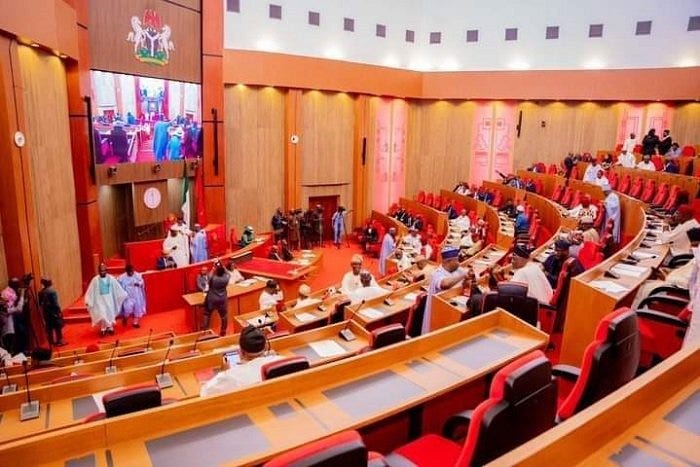
The Senate on Wednesday announced a donation of ₦50 million to the families of five heroes who lost their lives during the kidnap and rescue of schoolchildren in the Oriire Local Government Area of Oyo State. The lawmakers had on Tuesday formally paid tribute to the fallen heroes, commending the operational discipline and renewed inter-agency collaboration that led to the successful rescue of the children.
During the operation, Lieutenant F. A. Isaac of the Nigerian Army, Private Silas Musa of the 81 Battalion, and Sergeant Abena John Jerome of the Nigeria Police Force lost their lives. Two teachers were also killed during the incident. Announcing the donation, Senate President Godswill Akpabio said the Senate took the decision to augment the upkeep of the children left behind by the deceased. He directed that each of the deceased families be given ₦10 million.
Earlier, a motion sponsored by Senate Leader Michael Opeyemi Bamidele recalled the national shock that greeted the May 15 abductions, describing them as a “disturbing expansion of organised criminal activities” into the South-West. The Senate resolution noted that the successful rescue “has restored hope and confidence among Nigerians, particularly parents and school communities,” adding that it sends an “unmistakable message” that criminals have no safe haven in Nigeria.
The Senate also urged authorities to provide the highest standard of medical care and full welfare packages to Lance Corporal Adamu Hussain, who sustained severe injuries while shielding the children from gunfire. To ensure this victory marks a permanent turning point, the Upper Chamber urged the Federal Government to sustain the momentum by intensifying military operations through the deployment of advanced surveillance technology, modern equipment and enhanced intelligence capabilities.
The donation is a gesture of recognition for the sacrifices made by security personnel. But ₦50 million, while significant, is a fraction of what the families have lost. The Senate’s gesture is commendable. The question is whether the government will follow through with the systemic reforms needed to prevent future tragedies.
This echoes the 2014 Chibok kidnapping, when the National Assembly also made financial commitments to victims’ families. The mechanism then was different, but the result was the same: a legislative gesture that could not compensate for the loss.
The winners: the families of the fallen heroes, who receive financial support. The losers: the families of the two teachers who died, who also made the ultimate sacrifice, and the Nigerian state, which continues to lose its best citizens in a war it cannot win.
Bottom Line: The Senate has donated ₦50 million to the families of five fallen heroes. That is a recognition of sacrifice. The question is whether it is also a recognition of the systemic failures that made their sacrifice necessary.