


The Senate approved a ₦29.218 trillion borrowing plan on 24 November as it began work on a revised 2026 budget. President Bola Tinubu asked senators to cut total expenditure from ₦68.323 trillion to ₦65.176 trillion. Projected revenue, including government-owned enterprises, is ₦33.720 trillion, and capital expenditure is ₦26.232 trillion. The deficit stays at ₦31.457 trillion, or 5.64% of GDP. Borrowing splits into ₦18.428 trillion domestic and ₦10.790 trillion external .
The mechanics of the revision are not austerity. Tinubu said the changes would regularise expenditures incurred by the Nigerian National Petroleum Company Limited on behalf of the Federation, address underprovided debt-service obligations, and recognise issued capital warrants and supplementary commitments . The money was already spent or committed. The appropriation is being adjusted to match reality.
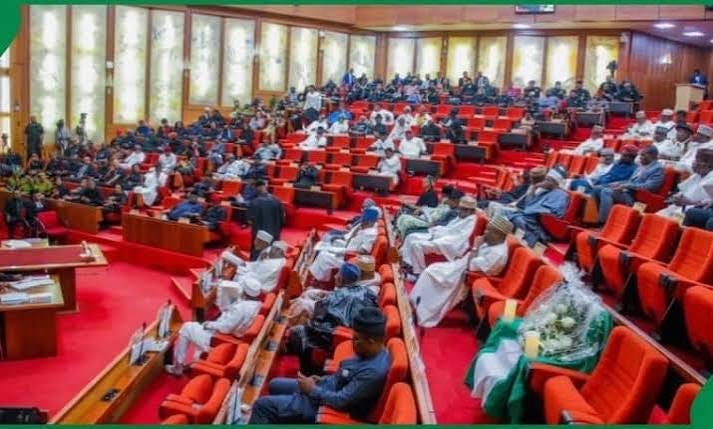
Senate Leader Opeyemi Bamidele said the budget must be implemented before 31 December and urged senators to suspend campaign activities. Senate President Godswill Akpabio referred the bill to committee and adjourned until 1 December. The only reported concern came from Senator Garba Maidoki, who asked for adequate funding of constituency and rural projects .
This echoes the 2016 and 2020 budget revisions, when the government adjusted spending mid-year to reflect revenue shortfalls and unbudgeted obligations. It also mirrors the longer pattern of Nigerian appropriations being revised after the fact rather than executed as passed.
The winners are the Ministry of Finance, which gets a budget that matches its cash position, and the ministries whose capital projects were protected. The losers are the senators who must approve a cut and fresh borrowing in the same week, and the taxpayers who will service a deficit that did not shrink with the spending.
Bottom Line: A budget cut that leaves borrowing and the deficit untouched is not fiscal discipline. It is bookkeeping.